

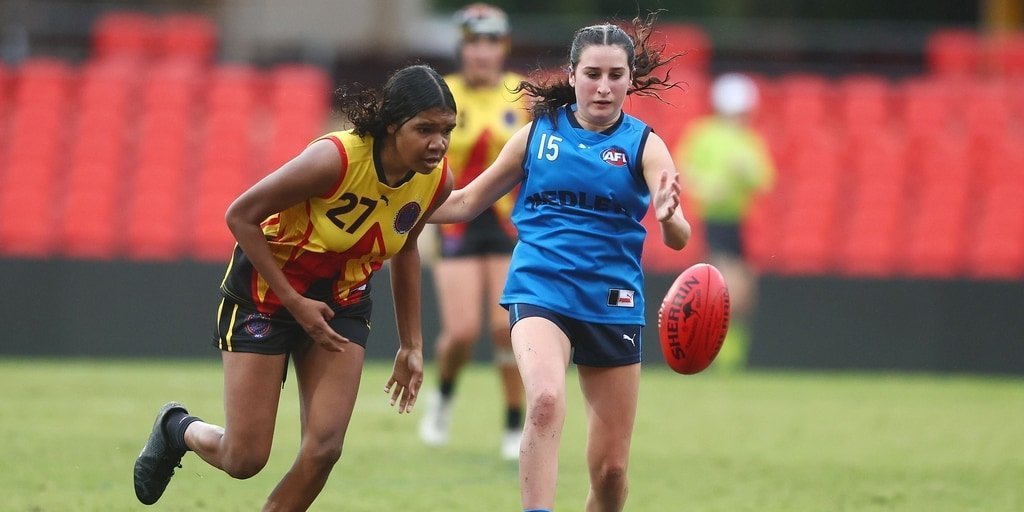
Indigenous AFLW Numbers Plummet, But Top End Youth Academy Offers Hope for Future of Women’s Footy
- Indigenous representation in the AFLW has dropped to just 22 players, down from 26 in 2023, sparking concerns about the future of women’s footy.
- The Top End Youth Academy in Darwin is bucking the trend, with over 270 young players participating in the program and showing remarkable improvement in just a few months.
- AFLW players and teams are working to promote the game and provide pathways for Indigenous girls, with the recent Dreamtime match in Darwin attracting a crowd of over 4,000 people.
- The academy’s success has sparked hopes that it can help strengthen the game in the Northern Territory and provide a pipeline of talented young players for the AFLW.
The AFLW’s Indigenous Round has highlighted the challenges facing women’s footy, with a decline in Indigenous representation in the competition. However, the Top End Youth Academy in Darwin is offering a glimmer of hope for the future of the game.
The academy, launched earlier this year, has already attracted over 270 young players and is providing a much-needed pathway for Indigenous girls to develop their skills and pursue their dreams.
The academy’s success is all the more remarkable given the limited opportunities for young players in the Northern Territory. According to AFLNT’s Josh Kleine, the academy’s manager, the program has been a game-changer for the local community.
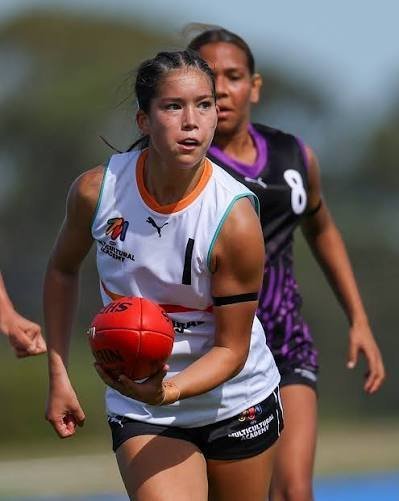
“We’ve only got the kids for an hour and a half a week on the track with training, so our encouragement is for them to take the lessons we teach and do the work away from the track as well,” he said.
The results have been impressive, with many of the young players showing significant improvement in just a few months. Kleine said that the academy’s focus on skills development and game sense has been key to its success.
“We’ve done some work on things like leg drives and different things, and to see someone who was struggling to get the concept, panicked a little bit, and sort of rushed handballs out, to see that then translate into a game where they’re actually taking the tackler on and driving through the contest, it’s amazing to see,” he said.
The Top End Youth Academy is not just about developing talented young players, but also about strengthening the game in the Northern Territory.
Kleine said that the academy’s goal is to create a pipeline of talented young players who can go on to represent the NT in national competitions.
“Ultimately, not everyone’s going to make it, but we’re creating stronger territory football off the back of it,” he said.
Analysis: What This Means for Australia
The decline in Indigenous representation in the AFLW is a concern that needs to be addressed. However, the success of the Top End Youth Academy offers a positive example of how to promote the game and provide pathways for Indigenous girls.
The academy’s focus on skills development and game sense is a model that could be replicated in other parts of the country.
Security analysts say that the decline in Indigenous representation in the AFLW is a symptom of a broader issue – the lack of opportunities and resources for Indigenous communities.
“The AFLW needs to do more to promote the game and provide pathways for Indigenous girls,” said one analyst.
“The Top End Youth Academy is a great example of how to do it, but more needs to be done to address the systemic issues that are driving the decline in Indigenous representation.”
Law enforcement insiders warn that the lack of opportunities and resources for Indigenous communities can have serious consequences, including increased rates of crime and social unrest.
“The AFLW has a role to play in promoting social cohesion and providing positive role models for young Indigenous people,” said one insider.
Industry observers believe that the success of the Top End Youth Academy could have a positive impact on the AFLW as a whole. “The academy is providing a pipeline of talented young players who can go on to represent the NT in national competitions,” said one observer.
“This could help to strengthen the game in the Northern Territory and provide a boost to the AFLW.”