
Pacific Power Struggle: China’s Fury as Taiwan Crashes the Party at Regional Summit
- Taiwan’s surprise attendance at the Pacific Islands Forum sparks diplomatic clash with China
- Beijing’s Pacific envoy warns of ‘consequences’ for hosts Palau and other nations
- Prime Minister Anthony Albanese refuses to condemn China’s bullying tactics, citing Pacific-led decision making
- Taiwan’s presence at the summit raises questions about China’s growing influence in the region
The usually tranquil Pacific Islands Forum has been shaken by a dramatic diplomatic clash between China and Taiwan, with Beijing’s Pacific envoy warning of ‘consequences’ for the host nation, Palau, and other countries in the region.
The controversy erupted after Taiwan’s Foreign Minister, Lin Chia-lung, was invited to the opening ceremony of the 55th Pacific Islands Forum leaders’ meeting in Koror, Palau.
The move was seen as a bold statement by Palau, one of only 12 countries that formally recognises Taiwan rather than Beijing. China, which regards Taiwan as part of its territory under its ‘One China’ principle, was quick to respond.
China’s Pacific envoy, Qian Bo, expressed ‘serious concern’ to the Palauan government and forum organisers, warning that there would be ‘consequences’ for Taiwan’s presence.
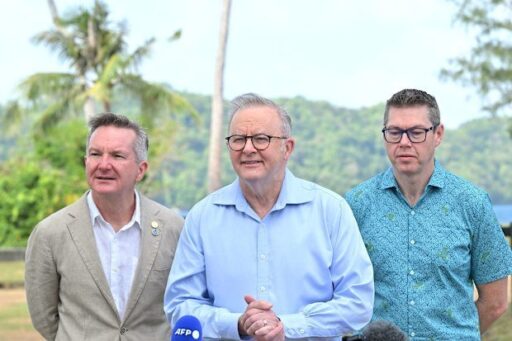
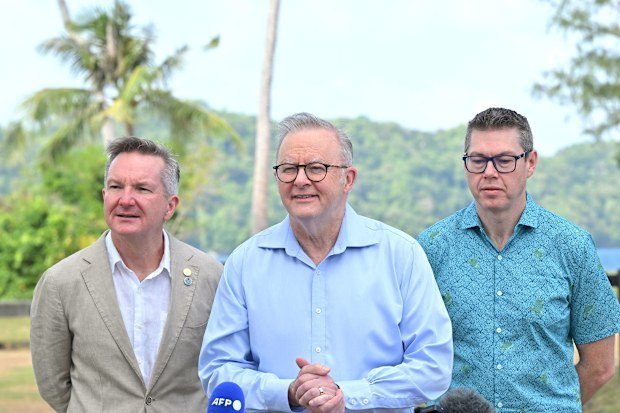
Prime Minister Anthony Albanese, who is attending the summit, refused to answer questions about whether China was bullying the host nation, instead stressing the importance of Pacific-led decision making.
‘This is a paradise here in Palau, and one of the things that is obvious as you’ve been walking around here is how friendly and how peaceful this place is,’ Albanese said.
‘I’m focused on members of the Pacific family. And that is precisely the meetings that I have scheduled here.’
However, Palau President Surangel Whipps Jr used his opening address to deliver a thinly veiled rebuke of outside powers seeking to influence Pacific nations. ‘The world increasingly recognises the strategic importance of our region and we welcome friends and genuine partnerships,’ Whipps said.
‘Our partners are welcome to sail with us, but they do not choose our destination.’
The Taiwan dispute has become one of the region’s most sensitive geopolitical fault lines.
China’s growing influence in the Pacific has raised concerns among some nations, with Beijing using its economic muscle to secure strategic partnerships and undermine Taiwan’s presence in the region.
Security analysts say that China’s behaviour at the Pacific Islands Forum is a clear example of its increasing assertiveness in the region. ‘China is using its economic power to exert influence over Pacific nations and undermine Taiwan’s presence,’ said one analyst.
‘This is a clear challenge to the region’s stability and security.’
Law enforcement insiders warn that China’s growing influence in the Pacific could also have serious implications for regional security. ‘China’s increasing presence in the Pacific could create new opportunities for transnational crime and terrorism,’ said one insider.
‘This is a wake-up call for regional leaders to take a closer look at China’s intentions and ensure that their nations are not compromised.’
Analysis: What This Means for Australia
The diplomatic clash between China and Taiwan at the Pacific Islands Forum has significant implications for Australia’s national security and regional relationships. As a key player in the Pacific, Australia has a vested interest in maintaining regional stability and security.
China’s growing influence in the region could challenge Australia’s traditional leadership role and create new security risks.
Australia must carefully navigate the complex web of relationships in the Pacific to ensure that its interests are protected.
This includes working closely with Pacific nations to build their resilience and capacity to resist external influence, as well as engaging with China to address concerns about its growing presence in the region.
Ultimately, the Taiwan dispute at the Pacific Islands Forum is a reminder of the complex and rapidly changing nature of the region.
As Australia looks to the future, it must be prepared to adapt to new challenges and opportunities, and to work with its Pacific partners to build a more secure and prosperous region.