


‘Shocking’ Failure of the System: Six-Week-Old Aboriginal Baby Dies in Overcrowded Housing After Mother Evicted from Crisis Accommodation
- A six-week-old Aboriginal baby died from sudden unexpected death of an infant (SUDI) in an overcrowded home in Alice Springs.
- The mother, 21, had been evicted from crisis accommodation six days earlier and was forced to sleep with her baby on a mattress on the floor.
- The Northern Territory Coroner found the NT Department of Children and Families failed to provide a safe sleep space for the infant, despite knowing the mother was “highly vulnerable” with a complex trauma history.
- The coroner has recommended the NT government review and amend policies, practices, and procedures to ensure the safety of infants at risk of SUDI.
The tragic death of a six-week-old Aboriginal baby in an overcrowded home in Alice Springs has highlighted the shocking failure of the system to protect vulnerable mothers and their infants.
The baby died from sudden unexpected death of an infant (SUDI) in September 2024, just six days after the mother was evicted from crisis accommodation.
The Northern Territory Coroner, Elisabeth Armitage, has found that the NT Department of Children and Families (DCF) failed to provide a safe sleep space for the infant, despite knowing the mother was “highly vulnerable” with a complex trauma history.
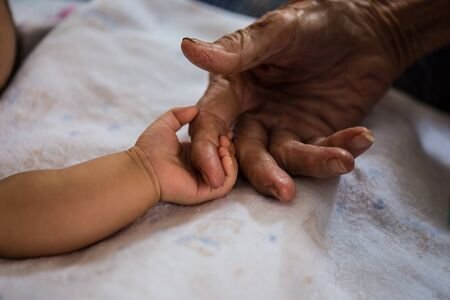
The mother, 21, had been discharged from hospital after giving birth and was initially placed in crisis accommodation. However, after breaking curfew and other rules, she was given two weeks to find alternative accommodation.
With nowhere else to go, she was forced to move in with her sister-in-law, who had previously assaulted her, along with seven other people, including three children.
The coroner found that the department knew the woman was “highly vulnerable” with a complex trauma history and that she was being exited from a supportive environment into homelessness with a 42-day-old baby.
On the morning of September 22, the mother woke to find her baby limp and cold to the touch, with blood coming from her mouth. Emergency services were called, but the baby could not be revived and was declared dead less than an hour later.
The coroner identified several risks in the infant’s sleeping environment, including co-sleeping with her mother on a soft, single-sized mattress on the floor.
This tragic event is not an isolated incident. The Northern Territory has the highest infant mortality rate in Australia, with 6.53 deaths per 1,000 people, almost double the national average.
The infant death rate more than doubles again for Aboriginal and Torres Strait Islander babies born in the Northern Territory, with 13.3 deaths for every 1,000 live births.
The coroner has repeated her previous recommendations around providing culturally appropriate education on safe sleeping practices and that services take reasonable steps to identify where an infant might be at risk of SUDI.
Analysis: What This Means for Australia
The death of this six-week-old baby is a stark reminder of the need for urgent action to address the systemic failures that are putting vulnerable mothers and their infants at risk.
The Northern Territory government must take immediate action to review and amend policies, practices, and procedures to ensure the safety of infants at risk of SUDI.
This includes providing culturally appropriate education on safe sleeping practices and ensuring that services take reasonable steps to identify where an infant might be at risk.
Furthermore, the government must address the root causes of homelessness and overcrowding, particularly for Aboriginal and Torres Strait Islander families. This includes increasing funding for homelessness services and providing access to suitable accommodation for expectant and new mothers.
The government must also prioritize Aboriginal community-controlled service delivery and ensure that investigations or engagements with families are not closed prematurely.
Security analysts say that the failure of the system to protect vulnerable mothers and their infants is a major concern for national security. “This is a classic example of how systemic failures can have devastating consequences,” said one analyst.
“The government must take immediate action to address these failures and ensure that vulnerable mothers and their infants are protected.”
Law enforcement insiders warn that the failure to provide safe sleep spaces for infants is a major risk factor for SUDI. “This is a preventable tragedy,” said one insider.
“The government must take immediate action to ensure that vulnerable mothers and their infants are provided with safe sleep spaces.”