


Victoria Declared Australia’s Crime Capital: ‘Really, Really Big Numbers’ of Car Thefts and Home Burglaries Spark Alarm
- Victoria records almost twice as many home burglary claims as NSW and Queensland combined, with a car stolen or broken into every 43 minutes.
- Melbourne alone accounts for more car theft claims than every other Australian capital city combined, with insurers paying out $244 million in 2025-26.
- A home is broken into every two hours in Victoria, with a staggering 12,300 motor theft insurance claims made in the past year.
- Experts warn that Victoria’s crime problem is a national outlier, with every other state and territory recording a decline in motor theft and home burglary claims.
The latest data from the Insurance Council of Australia has painted a disturbing picture of Victoria’s crime landscape, with the state earning the unwanted title of Australia’s crime capital.
The statistics are stark: a car is stolen or broken into every 43 minutes, while a home is broken into every two hours.
The numbers are so alarming that even the Insurance Council’s CEO, Andrew Hall, has described them as “really, really big” and urged the state government to take immediate action.
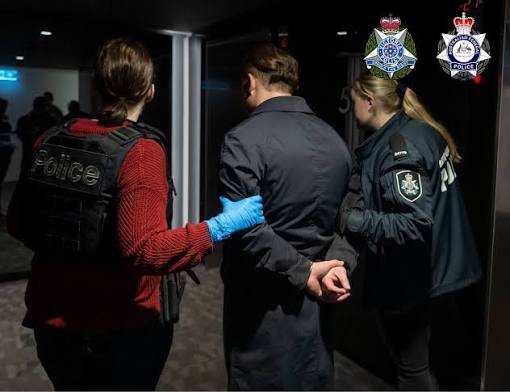
According to the data, Victoria recorded almost twice as many home burglary claims as NSW and Queensland combined, with Melbourne alone accounting for more car theft claims than every other Australian capital city combined.
The state saw over 12,300 motor theft insurance claims in 2025-26, costing insurers a staggering $244 million. The majority of these claims came from metropolitan areas, highlighting the severity of the problem in urban centers.
The Insurance Council’s data also revealed that property theft and burglary claims in Victoria have skyrocketed, with almost 3900 claims made in the past year, costing insurers over $56 million.
This trend has prompted concerns that Victoria is becoming a haven for criminals, with Hall warning that the state is being targeted by organized crime groups.
“Crime targets the weakest link, and at the moment, it’s targeting Melbourne and it’s targeting Victoria,” he said.
One of the most concerning aspects of the data is the recovery rate of stolen vehicles. Insurers have reported that many stolen cars are never returned, leaving owners with significant financial losses.
Hall has acknowledged the efforts of Victoria Police but emphasized that a different approach is needed to reverse the trend. “I think the police are doing their very best, but clearly, something needs to change.
Doing the same thing and hoping for a different outcome is not going to be the way forward here in Victoria,” he said.
Analysis: What This Means for Australia
The implications of Victoria’s crime crisis are far-reaching, with significant national security and economic consequences. The state’s high crime rate is not only affecting insurance premiums but also contributing to a sense of insecurity among residents.
As Hall pointed out, “We can get on top of crime in this country.
We don’t have to accept that it’s somehow the normal.” The data highlights the need for a comprehensive and coordinated approach to addressing crime, including stronger intelligence sharing, targeted prevention measures, and investment in specialist law enforcement capabilities.
Security analysts say that Victoria’s crime problem is a symptom of a broader issue, with organized crime groups exploiting weaknesses in the state’s law enforcement and justice systems.
“The fact that Victoria is experiencing such high levels of crime is a clear indication that the current approach is not working,” said one expert. “The state government needs to take a more proactive and innovative approach to addressing the root causes of crime, rather than just treating the symptoms.”
Law enforcement insiders warn that the situation in Victoria is not just a matter of public safety but also has significant economic implications. “The cost of crime is not just financial, but also social and emotional,” said one insider.
“The Victorian government needs to take a comprehensive approach to addressing crime, including investing in community programs and providing support for victims of crime.”
As Victoria prepares for the upcoming bushfire season, the Insurance Council of Australia has also warned that there is still no clear or coordinated plan for disaster recovery following the January 2026 bushfires.
The council is calling for a centrally coordinated, state government-led and funded clean-up arrangement, as well as the abolition of stamp duty on business, home, and contents insurance products.
This move is expected to return $2.3 billion to Victorians and improve insurance affordability for healthcare professionals, small businesses, community organizations, and live music venues.