


25 Years On, Former PM John Howard Reflects on the Day That Changed the World: ‘September 11 Was a Switch that Was Flicked’
- Former Prime Minister John Howard recalls the day the world changed forever, 25 years after the 9/11 terror attacks
- Howard was in Washington, preparing for a press conference, when the Twin Towers were struck, and the Pentagon was hit
- The ANZUS Treaty was invoked for the first and only time, with Australia joining the US in military operations in Afghanistan and Iraq
- Howard believes the fight against terrorism is far from over, and the world is still reeling from the aftermath of that fateful day
It’s been 25 years since the devastating 9/11 terror attacks shook the world, leaving an indelible mark on global politics, international relations, and the very fabric of our societies.
For former Prime Minister John Howard, the memories of that day are still etched vividly in his mind. He was in Washington, preparing for a press conference, when the unthinkable happened.
Two passenger jets slammed into the World Trade Centre, and a third hit the Pentagon, marking the beginning of a long and bloody war on terrorism.
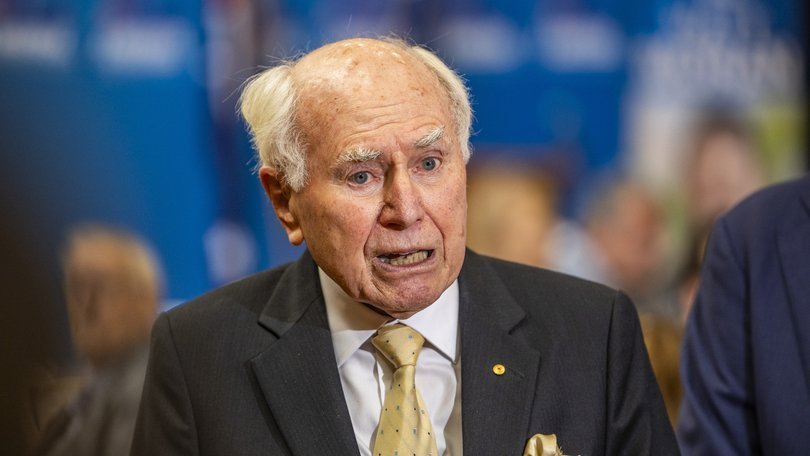
Howard had met US President George W. Bush for the first time just a day before the attacks, and terrorism was only briefly mentioned in their discussion.
But on that fateful day, it became the only thing anyone could talk about. The world was forever changed, and the consequences of that day would be felt for generations to come.
As Howard so aptly put it, “The world changed and it’s never been the same since.”
The ANZUS Treaty, signed 75 years ago, was invoked for the first and only time in response to the 9/11 attacks.
Australia joined the United States in military operations in Afghanistan and later Iraq, marking a significant shift in the country’s foreign policy and its role in global affairs.
The treaty, which has been a cornerstone of Australian-American relations, was designed to provide mutual defense in the event of an attack. But as Howard noted, “We thought if there was any invocation of it being undertaken, it would be the Americans to help us.”
In the aftermath of the attacks, Howard’s wife, Jeanette, and son, Tim, were sightseeing near the Pentagon and were quickly located and brought to safety. Later, from a bunker beneath the Australian Embassy, Howard fronted another press conference, his face etched with disbelief.
As he reflected on the demands of leadership, he said, “No, no. You can’t allow yourself ever to get scared.” But the vulnerability was palpable, and the gravity of the situation was not lost on anyone.
As the years have passed, the world has grappled with the consequences of that day. The war on terrorism has been a long and bloody one, with countless lives lost and communities torn apart.
But as Howard noted, “I think yes, we are safer now than we were on September 11, 2001.” However, the threat of terrorism remains, and the world is still reeling from the aftermath of that fateful day.
Analysis: What This Means for Australia
The 9/11 attacks marked a significant turning point in Australian foreign policy, with the country’s involvement in the war on terrorism having far-reaching consequences.
The invocation of the ANZUS Treaty for the first and only time highlighted the strength of the Australian-American alliance and the country’s commitment to global security.
But as the years have passed, the threat of terrorism has evolved, and Australia must continue to adapt and respond to the changing landscape.
Security analysts say that the 9/11 attacks exposed significant vulnerabilities in global security, and the world is still grappling with the consequences. The rise of extremist groups and the proliferation of social media have created new challenges for law enforcement and intelligence agencies.
As Australia continues to navigate the complex web of global security, it must remain vigilant and proactive in its response to the evolving threat of terrorism.
Industry observers believe that the 9/11 attacks marked a significant shift in the global economy, with the war on terrorism having far-reaching consequences for trade, commerce, and investment.
The rise of extremist groups has created new challenges for businesses and governments, and the world must continue to adapt and respond to the changing landscape.
As the world marks the 25th anniversary of the 9/11 attacks, it is clear that the consequences of that day are still being felt. The war on terrorism is far from over, and the world must remain vigilant and proactive in its response to the evolving threat.
For Australia, the lessons of 9/11 are clear: the country must continue to adapt and respond to the changing landscape, and remain committed to global security and stability.