
Australian Motorists Face Uncertain Future As Petrol And Diesel Prices Continue To Surge Amid Iran War
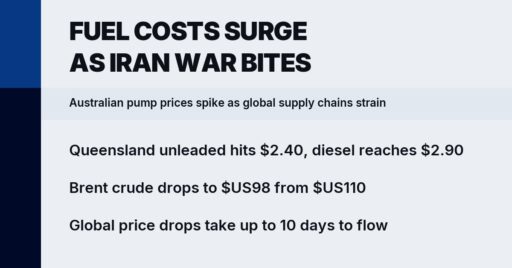
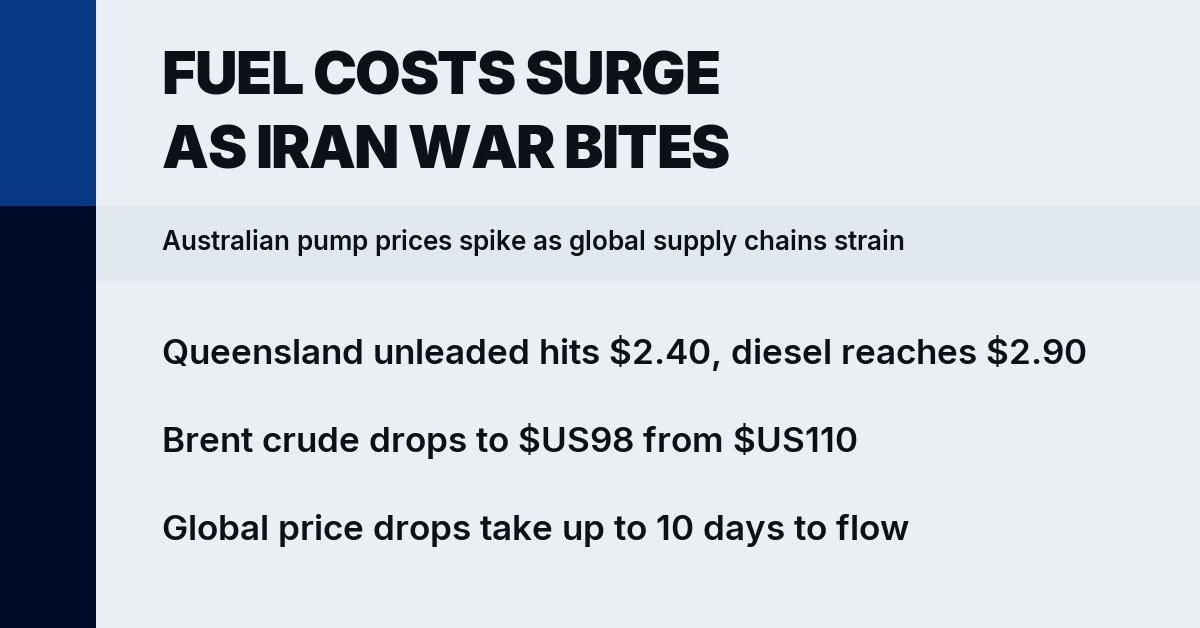
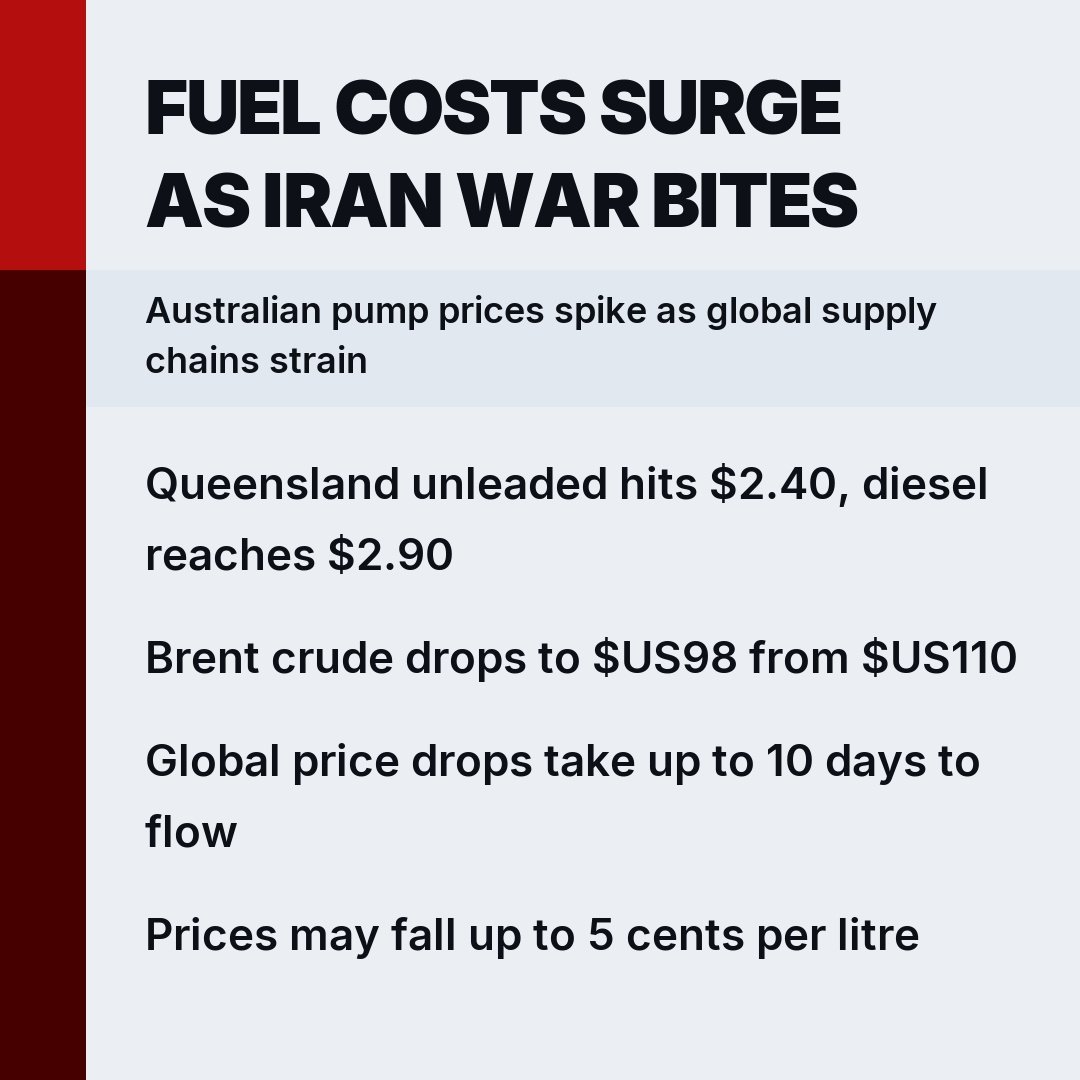
- Australian fuel prices are skyrocketing, with some service stations charging over $2.40 per litre for unleaded and $2.90 for diesel
- Global conflicts in Iran and Ukraine have severely impacted fuel exports, leaving Australia exposed to supply chain disruptions
- Experts warn that despite a recent drop in Brent crude prices, fuel prices may not decrease immediately, and motorists should be prepared for continued volatility
- The Albanese government’s temporary cut to the fuel excise has ended, leaving consumers to face the full force of rising fuel costs
Australia is in the grip of a fuel price crisis, with petrol and diesel prices surging to unprecedented heights amid the ongoing Iran war.
The global benchmark for oil prices, Brent crude, has fallen to its lowest level in weeks, but experts caution that this may not translate to immediate relief at the bowser.
In fact, many service stations are still charging exorbitant prices, with some Queensland outlets demanding over $2.40 per litre for unleaded and $2.90 for diesel.
The situation is complex, with international conflicts in Iran and Ukraine severely decreasing fuel exports from global producers such as Russia, Saudi Arabia, and the United Arab Emirates.
The International Energy Agency has warned that many refineries are already stretched to capacity, leaving few options to prevent a further tightening of supplies and higher prices in the coming months.
Attacks by the Iranian-backed Houthis on oil tankers have also complicated export routes, adding to the uncertainty and volatility in the market.
Australia’s exposure to global disruptions is particularly concerning, given that the country relies heavily on imports to meet its fuel needs.
According to University of Sunshine Coast finance professor Sajid Anwar, although Australia draws on multiple suppliers, including Singapore, South Korea, and Japan, these sources are all part of the same Asia-Pacific supply chain, making them vulnerable to regional disruptions.
The Albanese government’s cut to the fuel excise, which ended on August 3, has also removed a temporary buffer for consumers, leaving them to face the full force of rising fuel costs.
Security analysts say that the situation highlights the need for Australia to diversify its energy sources and reduce its reliance on imported fuels. The country’s lack of refining capacity and limited domestic production make it particularly vulnerable to global price shocks.
As the conflict in the Middle East continues to escalate, the risk of further disruptions to supply chains and price increases remains high.
Law enforcement insiders warn that the situation could also have implications for national security, as high fuel prices could lead to increased costs for emergency services and other critical infrastructure.
Analysis: What This Means for Australia is that the country is facing a perfect storm of high fuel prices, supply chain disruptions, and national security concerns.
The situation requires a comprehensive response, including measures to reduce the country’s reliance on imported fuels, increase domestic production, and improve refining capacity. The government must also take steps to mitigate the impact of high fuel prices on consumers, particularly low-income households and small businesses.
This could include measures such as targeted subsidies, tax relief, or other forms of support.
Industry observers believe that the situation is likely to persist for some time, with prices potentially fluctuating considerably as markets reassess the probability of either de-escalation or further disruption.
Swinburne University of Technology transport professor Hussein Dia warns that oil prices are still extremely sensitive to developments in the Middle East, and that motorists should not assume that the volatility is over.
Instead, they should focus on finding ways to reduce their fuel consumption, such as by using public transport, carpooling, or driving more fuel-efficient vehicles.
Experts also recommend that consumers shop around for the cheapest fuel deals, using apps and other tools to compare prices and find the best value.
Independent stations may have cheaper fuel than the bigger brands, and families embarking on school holiday trips could save more than $20 a tank by filling up at the right location.
By taking these steps, consumers can help to reduce their fuel costs and mitigate the impact of high prices on their household budgets.
As the situation continues to evolve, it is essential for Australians to stay informed and take proactive steps to manage their fuel consumption and reduce their exposure to price volatility.
For more information on fuel prices and how to save money on petrol, visit the Australian Institute of Petroleum website or check out the Australian Bureau of Statistics for data on fuel prices and consumption trends.
By staying informed and taking action, Australians can help to navigate the challenges of high fuel prices and reduce their reliance on imported fuels.
As the country looks to the future, it is clear that a comprehensive approach to energy policy is needed, one that prioritizes domestic production, reduces reliance on imports, and promotes energy security and sustainability.