
Queensland Man Accused Of Bribing Foreign Officials To Influence Murder Investigation Into Estranged Wife’s Death Faces Uncertain Future As Bail Application Looms
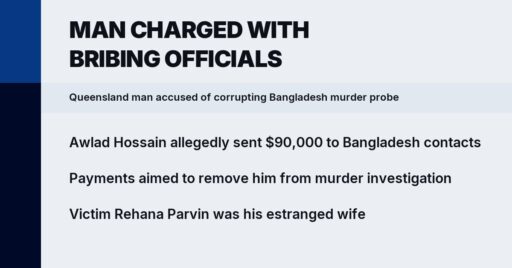
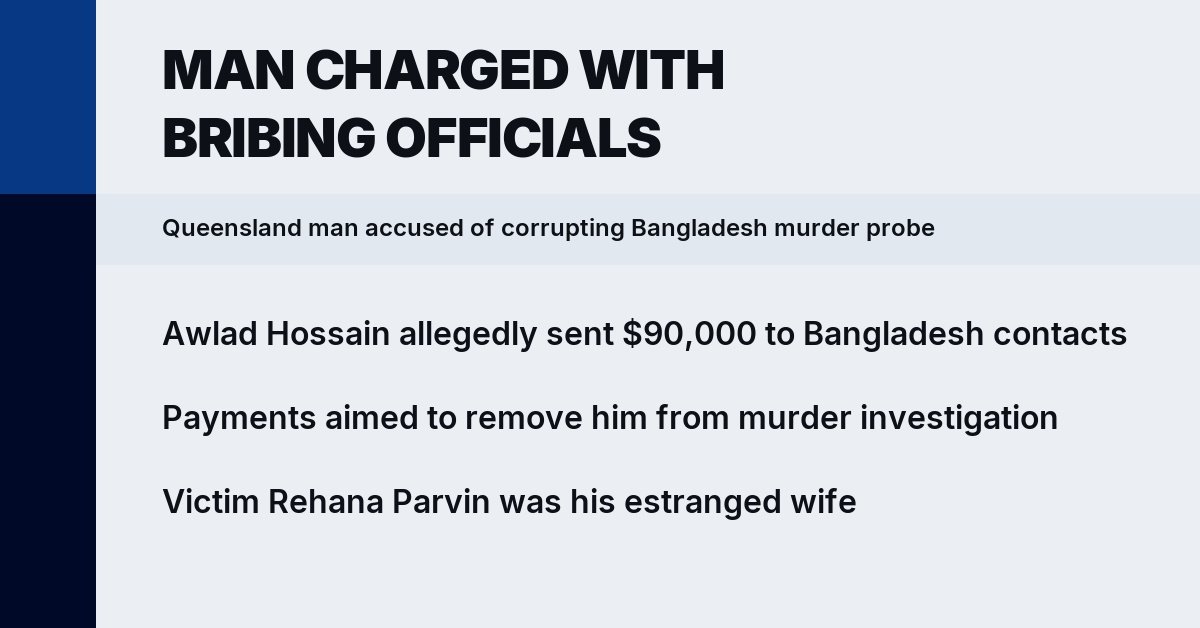
- A 51-year-old Queensland man, Awlad Hossain, is accused of sending over $90,000 to Bangladesh in an alleged bid to have his name removed from a police investigation into his estranged wife’s suspected murder.
- The case has sparked a heated debate about the integrity of foreign investigations and the role of Australian authorities in ensuring justice for victims of crime abroad.
- As Hossain’s bail application approaches, his lawyer, Torik Dib, claims his client is “shocked and concerned” by the allegations and will contest the bribery charge.
- The investigation into Rehana Parvin’s death remains ongoing, with both Australian and Bangladeshi authorities working to uncover the truth behind the suspected murder.
The story of Awlad Hossain and his estranged wife, Rehana Parvin, is a complex and disturbing one, filled with allegations of bribery, corruption, and murder.
At its core, it is a tale of a family torn apart by violence and deception, with far-reaching consequences for the individuals involved and the broader community.
As the case continues to unfold, one thing is certain: the pursuit of justice will be a long and arduous journey, requiring the cooperation of authorities on multiple continents.
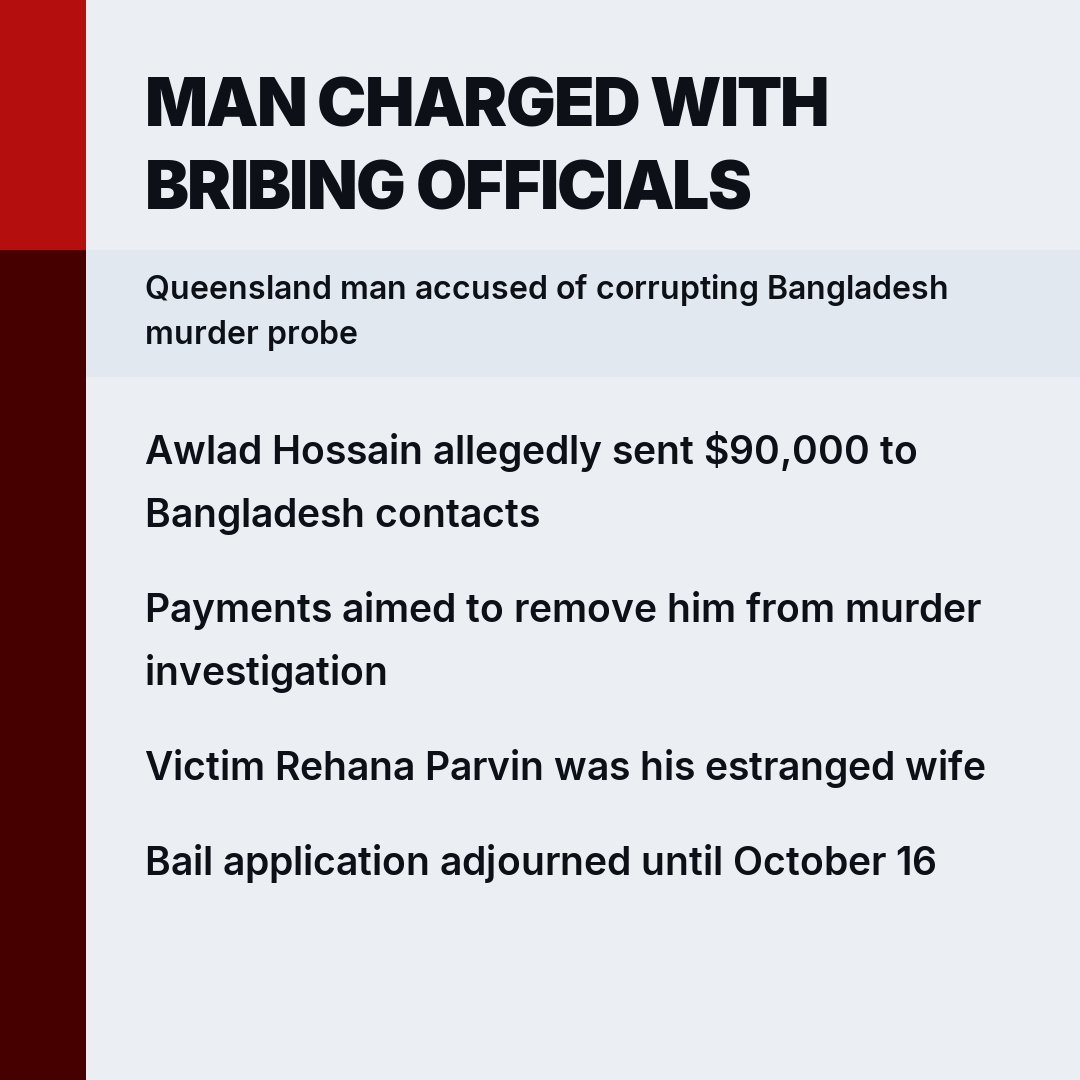
According to court documents, Hossain allegedly sent multiple payments totaling over $90,000 to individuals in Bangladesh between 2019 and 2021.
These payments, prosecutors claim, were made in an attempt to influence the investigation into Parvin’s death and have Hossain’s name removed from the list of suspects.
The precise nature of these payments and the individuals involved remains unclear, but it is evident that Hossain’s actions have raised serious concerns about the integrity of the investigation and the potential for corruption.
To understand the context of this case, it is essential to examine the events leading up to Parvin’s death and the subsequent investigations. The couple, who had five children together, had been living in Australia for nearly two decades, with stints in Brisbane and regional Queensland.
Their relationship, however, was marked by turmoil, and the pair had been estranged for some time before Parvin’s passing.
The circumstances surrounding her death are still shrouded in mystery, but it is believed that she was murdered, prompting both Australian and Bangladeshi authorities to launch separate investigations.
The Australian Federal Police (AFP) have been working closely with their Bangladeshi counterparts to uncover the truth behind Parvin’s death, with the Australian Federal Police playing a crucial role in coordinating the investigation.
Meanwhile, the Bangladeshi police have applied for an arrest warrant for Hossain, although he has not been charged in relation to the murder investigation.
As the case continues to evolve, it is clear that the pursuit of justice will require careful cooperation between authorities on both sides, as well as a deep understanding of the complex cultural and legal nuances at play.
Analysis: What This Means for Australia
The allegations against Hossain have significant implications for Australia, particularly in terms of national security and law enforcement.
The fact that an Australian citizen is accused of bribing foreign officials to influence a murder investigation raises serious concerns about the integrity of our justice system and the potential for corruption.
Furthermore, the case highlights the need for increased cooperation between Australian authorities and their international counterparts to combat transnational crime and ensure that those responsible for violent crimes are held accountable.
As crime rates continue to rise, it is essential that our law enforcement agencies are equipped to handle complex, cross-border investigations and that our justice system is robust enough to handle the challenges that come with them.
Security analysts say that the Hossain case is a prime example of the challenges posed by transnational crime and the need for increased cooperation between nations to combat it.
“The fact that an Australian citizen is accused of bribing foreign officials to influence a murder investigation is a wake-up call for our law enforcement agencies,” said one expert.
“It highlights the need for increased resources and training to tackle complex, cross-border investigations and to ensure that those responsible for violent crimes are held accountable.” Meanwhile, law enforcement insiders warn that the case is just the tip of the iceberg, with many more instances of transnational crime going undetected or unreported.
As the Australian economy continues to grow and our connections with the rest of the world deepen, it is essential that we prioritize the development of robust, effective law enforcement strategies to combat these threats.
As the bail application for Awlad Hossain approaches, the community remains on high alert, waiting to see how the case will unfold.
The allegations against Hossain have sparked a heated debate about the integrity of foreign investigations and the role of Australian authorities in ensuring justice for victims of crime abroad.
While the outcome of the case is far from certain, one thing is clear: the pursuit of justice will be a long and arduous journey, requiring the cooperation of authorities on multiple continents and a deep understanding of the complex cultural and legal nuances at play.
As we move forward, it is essential that we prioritize the development of robust, effective law enforcement strategies to combat transnational crime and ensure that those responsible for violent crimes are held accountable, no matter where they may be in the world.