
Pauline Hanson Accuses Labor of Fanning Flames of Violence as One Nation Surges to Historic High in Latest Poll
- One Nation leader Pauline Hanson slams Labor for ‘encouraging potential incitements to violence’ with ‘threatening’ language
- Hanson warns of ‘dangers of poisonous political rhetoric’ after British politician Ann Widdecombe’s murder
- One Nation overtakes Labor as preferred party of government in latest Newspoll, with 30% primary vote
- Pauline Hanson says Labor’s ‘words have consequences’ and urges PM Anthony Albanese and Treasurer Jim Chalmers to ‘turn the temperature down’
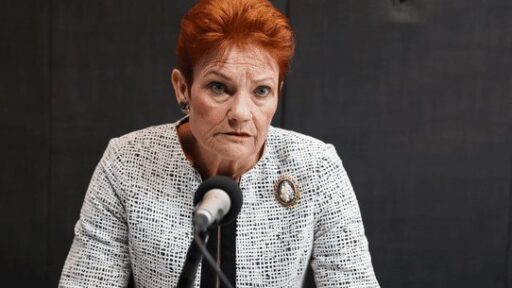
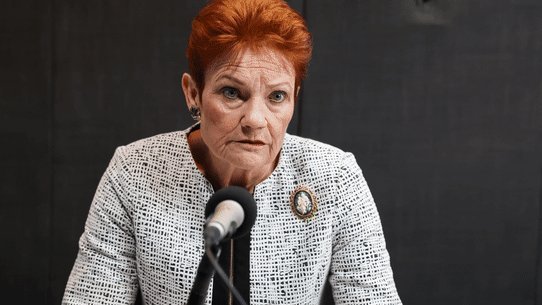
In a scathing attack on the Labor government, One Nation leader Pauline Hanson has accused Prime Minister Anthony Albanese and Treasurer Jim Chalmers of using ‘threatening’ language that encourages violence against her party.
Hanson’s comments come as One Nation surges to a historic high in the latest Newspoll, overtaking Labor as the preferred party of government.
Hanson took to social media to express her concerns, saying while she supports free speech and open debate, she draws the line at ‘encouraging potential incitements to violence’.
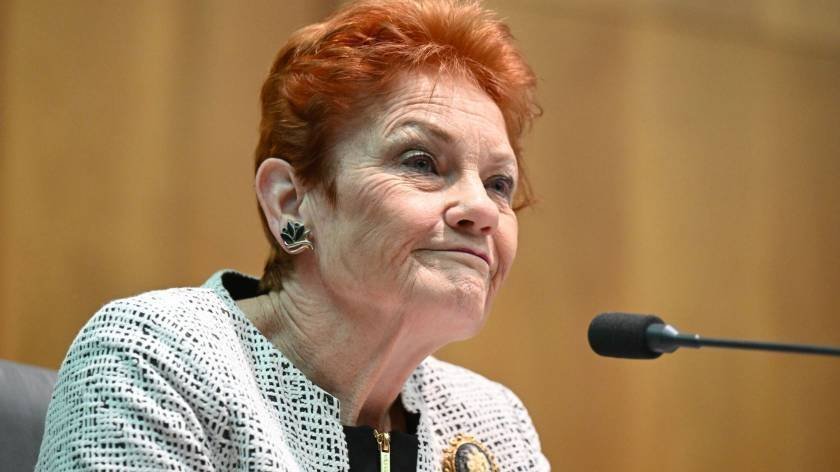
She pointed to the murder of British politician Ann Widdecombe as a warning of the dangers of ‘poisonous political rhetoric’. Widdecombe was murdered at her home in Devon earlier this year, with authorities still investigating if the Conservative MP’s death was politically motivated.
Hanson accused Albanese and Chalmers of telling Australians that their ‘democratically elected opponents are “dangerous” and a “threat to our country”‘, saying their words invite people to treat One Nation as a threat.
‘Words have consequences,’ she said, urging the Prime Minister and Treasurer to ‘turn the temperature down’.
The One Nation leader said free speech and open debate are only possible when ‘everyone is protected from the threat of violence in response to what they say’.
She claimed Labor politicians ‘seem to get a free pass’ to use language they themselves would ‘never allow others to use’.
Hanson argued that when democratically elected parties are described as ‘threats’ and a ‘danger to the country’ by the Prime Minister and Treasurer, people will take those words seriously.
One Nation’s surge in the latest Newspoll has sent shockwaves through the Australian political landscape.
The minor party could win 30% of the primary vote if an election were held today, putting it ahead of the government’s 29% and lengths in front of the Coalition, which remains in the high teens.
The Greens have fallen to 13% since the last Newspoll in early August.
One Nation federal MP Barnaby Joyce attributed the party’s success to a sense of ‘dry pragmatism’ among voters.
‘They don’t like this idea that you have two people who sort of have a closed shop, a political closed shop, and you can only go to one or the other, and there’s nothing to really shake the show up,’ Joyce told the ABC.
Security analysts say the rise of One Nation is a symptom of a broader dissatisfaction with the major parties and a desire for change. ‘Australians are looking for alternatives to the traditional two-party system, and One Nation is capitalizing on that sentiment,’ said one expert.
Law enforcement insiders warn that the increasing polarization of Australian politics could lead to further incidents of violence and intimidation.
Analysis: What This Means for Australia
The rise of One Nation and the increasing polarization of Australian politics have significant implications for national security and public safety. As the major parties continue to struggle to connect with voters, the risk of violent extremism and intimidation grows.
The government must take a more nuanced approach to addressing the concerns of voters and promoting respectful dialogue, rather than relying on divisive rhetoric.
Industry observers believe that the One Nation surge is also a reflection of the growing discontent with the economy and the government’s handling of key issues such as housing crisis and cost of living.
As the election looms closer, the government will need to address these concerns and provide a clear vision for the country’s future.
Ultimately, the rise of One Nation is a wake-up call for the major parties to rethink their approach to politics and engage with voters in a more meaningful way.
As Hanson said, ‘the real danger to Chalmers and Albanese is the people of Australia coming for their government … at the ballot box’.