
Australia Mourns: Nine-Year-Old Boy Drowns in Drainpipe Tragedy, Sparking Fears Over Child Safety and Infrastructure Failures
- A young boy’s life cut short in a devastating drainpipe accident, leaving a community in shock and grief
- Questions raised over the safety of Australia’s waterways and infrastructure, as a long-running campaign warns of the dangers of playing in pipes and drains
- Police and authorities scramble to provide support to the family, as the nation grapples with the consequences of this tragic event
- A coronial inquest looms, promising to shed light on the circumstances surrounding the boy’s death and potential measures to prevent such incidents in the future
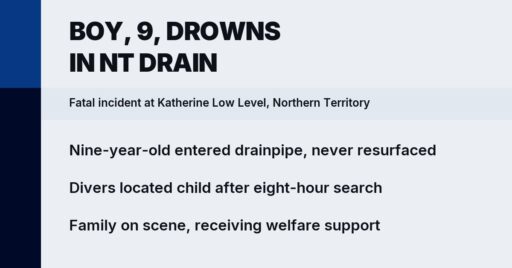
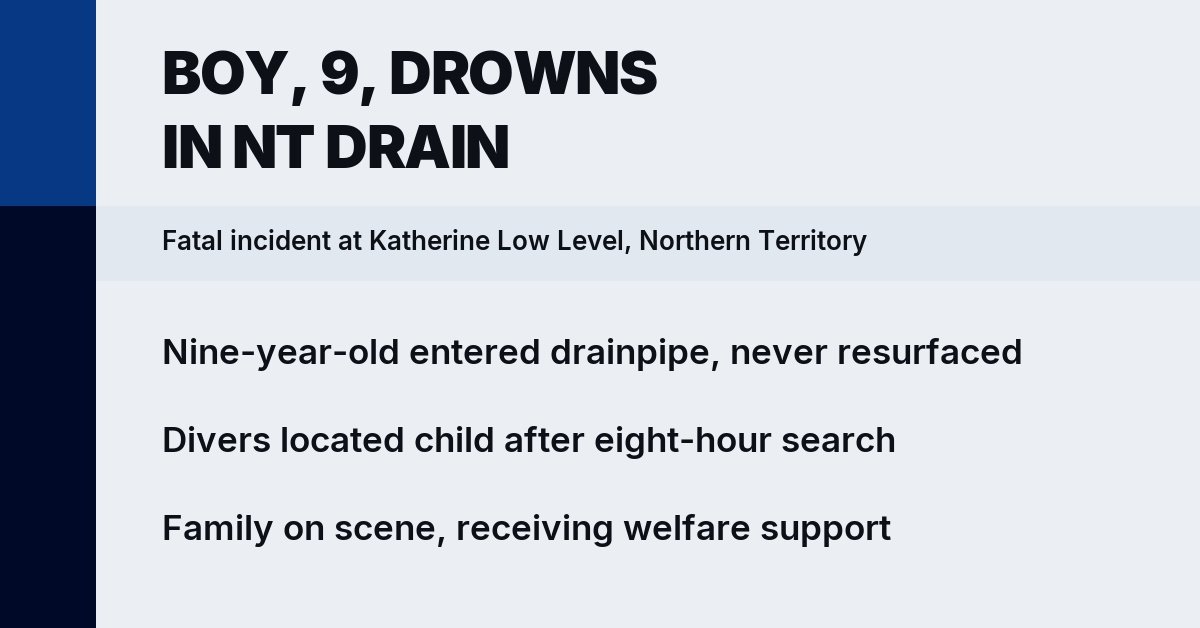
The Northern Territory town of Katherine is reeling from the devastating loss of a nine-year-old boy, who drowned after entering a drainpipe at Katherine Low Level.
The incident, which occurred at approximately 5:15pm yesterday, has sent shockwaves through the community, prompting an outpouring of grief and concern for the safety of Australia’s children.
As the news broke, NT Police Commander Neil Hayes expressed his deepest condolences to the family, acknowledging the tragedy and vowing to provide welfare support to those affected.
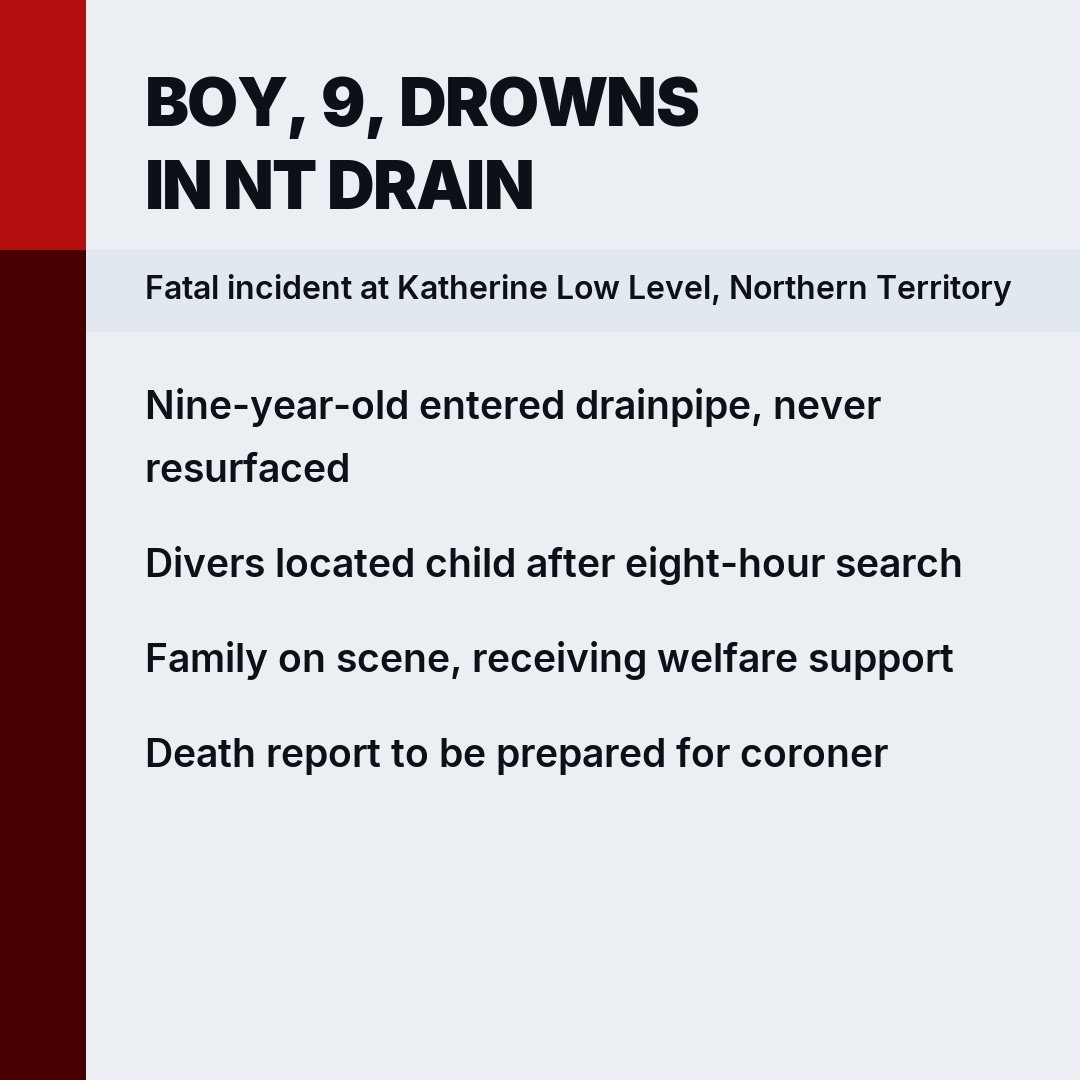
According to police, the boy had entered the drainpipe and failed to resurface, prompting a desperate search and rescue operation. Divers were deployed to the scene, and the child’s body was eventually located at 1:45am.
The circumstances surrounding the boy’s death are still being investigated, but the incident has already sparked fears over the safety of Australia’s waterways and infrastructure. In recent years, a long-running campaign has warned children of the dangers of playing in pipes and drains, particularly during the wet season.
The campaign, which includes simulated drownings in advertisements, aims to educate kids about the risks associated with exploring these areas.
The tragedy in Katherine is not an isolated incident.
In 2014, an eight-year-old boy in the Darwin satellite city of Palmerston drowned while playing in a drain, resulting in a coronial inquest that recommended regular inspections of drains.
The inquest highlighted the need for increased vigilance and proactive measures to prevent such incidents.
As the nation grapples with the consequences of this latest tragedy, questions are being raised about the efficacy of current safety measures and the role of infrastructure in preventing accidents.
The incident has also sparked concerns about the impact of urban development and planning on child safety, with many calling for a review of the design and construction of waterways and drainage systems.
Analysis: What This Means for Australia
The drowning of a nine-year-old boy in a drainpipe is a stark reminder of the importance of prioritizing child safety and infrastructure integrity. As the country mourns the loss of a young life, it is essential to examine the broader implications of this tragedy.
Security analysts say that the incident highlights the need for increased investment in safety measures, such as regular inspections and maintenance of drains, as well as public education campaigns to raise awareness about the dangers of playing in pipes and drains.
Law enforcement insiders warn that the consequences of inaction could be catastrophic, with potentially more lives lost if proactive measures are not taken.
Industry observers believe that a comprehensive review of urban development and planning policies is necessary to ensure that child safety is prioritized in the design and construction of waterways and drainage systems.
Experts say that the tragedy in Katherine serves as a wake-up call for Australian authorities to reassess their approach to child safety and infrastructure management.
By examining the circumstances surrounding the boy’s death and implementing measures to prevent similar incidents, Australia can take a crucial step towards creating a safer environment for its children.
As the nation continues to grapple with the aftermath of this devastating event, it is essential to remember that the safety of our children is a collective responsibility, requiring the collaboration of governments, communities, and individuals.
By working together, we can create a future where such tragedies are prevented, and our children can grow and thrive in a safe and supportive environment.
For more information on child safety and infrastructure management, visit child safety initiatives or Australian Bureau of Statistics for the latest data and research.