
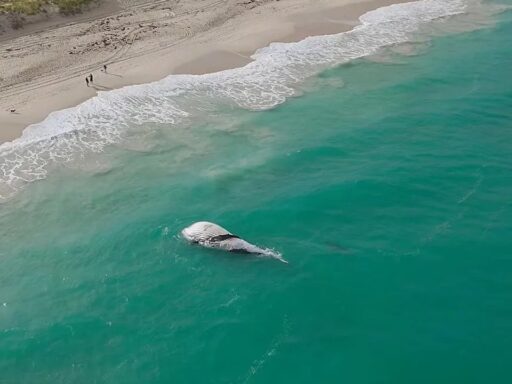
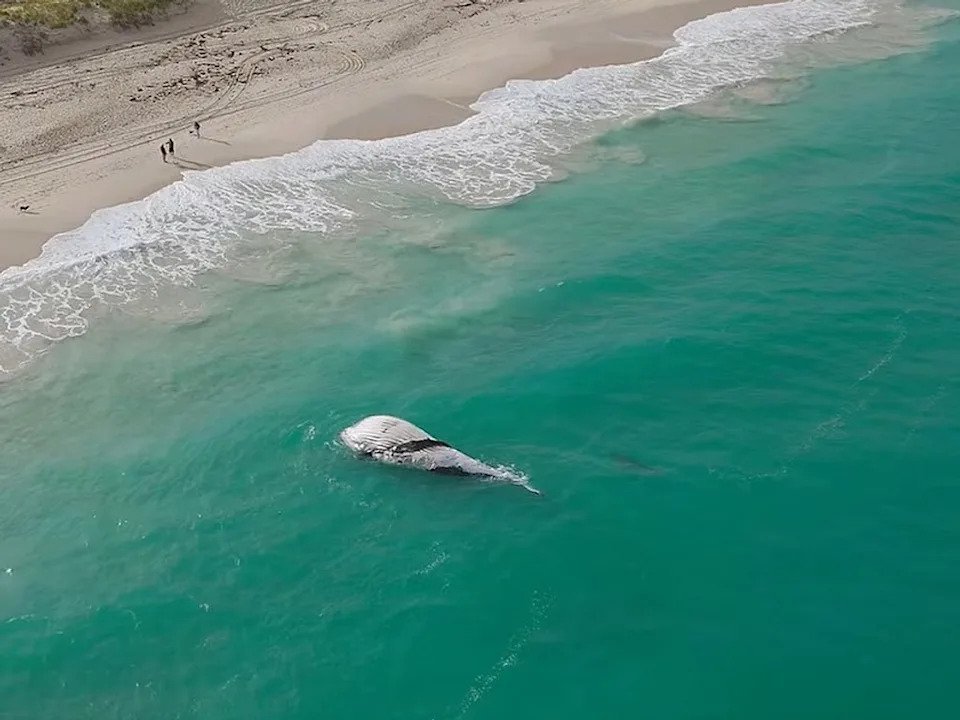
Beachgoers On High Alert As Massive Shark Threat Lingers Off Perth Coast After Rotting Whale Carcass Removal
- A 13-metre humpback whale carcass has been removed from South City Beach, but the danger it posed has only just begun, with great white sharks lurking in the waters
- The Westpac Surf Life Saving chopper spotted a three-metre great white shark just 15 metres from the shore, prompting a warning to nearby beachgoers
- The Department of Primary Industries and Regional Development has issued an updated shark warning for the entire Perth Metropolitan area, with multiple tagged great white and tiger sharks detected off Scarborough and Trigg
- Authorities warn that the scent of the dead marine mammal will keep predators prowling the waters for days, if not weeks, following the tragic death of 63-year-old swimmer Greg O’Neill just three weeks ago
The removal of the rotting whale carcass from South City Beach has been completed, but the massive shark threat it posed to beachgoers remains a pressing concern.
After days of attracting apex predators, including great white sharks, into the shallows, the 13-metre humpback was finally strapped down and secured for transport early on Thursday afternoon.
The logistics of the extraction proved a nightmare, with dozens of workers spending several hours in a complex operation to safely prepare the animal remains for transport.
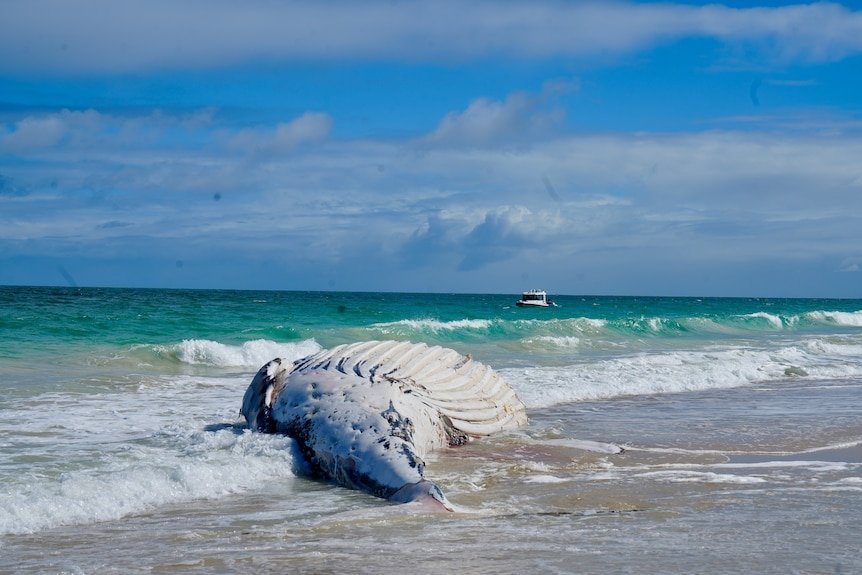
The whale’s sheer size and mass were starkly evident as it was loaded onto a truck, with its tail protruding from the back of the vehicle.
But even as the carcass was being removed, the danger in the water remained extreme.
The Westpac Surf Life Saving chopper was conducting aerial surveillance on Thursday afternoon when it spotted a three-metre great white shark just 15 metres from the shore, prompting a warning to nearby beachgoers.
The aircraft conducted a low-flying pass, its siren blaring, to alert those in the area of the lurking predator.
The Department of Primary Industries and Regional Development issued an updated shark warning for the entire Perth Metropolitan area, following the detection of a tagged great white shark near Scarborough Beach earlier in the morning.
Multiple alerts followed throughout the day as tagged great white and tiger sharks were detected circling off Scarborough and Trigg.
Authorities have repeatedly warned that the scent of the dead marine mammal will keep predators prowling the waters for days, if not weeks, and that the decomposing material left behind by the whale will take several tide flows to fully wash away.
The shark safety concerns are still heightened following the tragic death of 63-year-old swimmer Greg O’Neill, who was taken by a great white at Sorrento Beach just three weeks ago.
O’Neill was swimming just 15 metres from the shore when he was mauled by a five-metre great white, in front of horrified bystanders. He was the third person killed in a fatal shark attack across Western Australia this year.
The DPIRD has urged anyone in the Perth Metropolitan area to use “additional caution” if they plan on heading to the beach over the coming days, and to adhere to any beach closures advised by Local Government Rangers or Surf Life Saving WA.
Security analysts say that the removal of the whale carcass is just the beginning of a long process to ensure the safety of beachgoers in the Perth Metropolitan area.
The fact that the whale’s scent will linger in the waters for days, if not weeks, poses a significant threat to the public, and authorities must remain vigilant in their efforts to monitor the situation and provide warnings to those in the area.
Law enforcement insiders warn that the situation is a stark reminder of the dangers that exist in our oceans, and the need for continued investment in shark monitoring and surveillance technology.
Analysis: What This Means for Australia is that the country’s coastline is facing a growing threat from shark attacks, and that the removal of the whale carcass is just one part of a larger effort to mitigate this risk.
The fact that the Perth Metropolitan area is home to a large population and a popular tourist destination means that the authorities must take a proactive approach to ensuring public safety, and that this includes investing in shark monitoring and surveillance technology, as well as providing education and awareness programs for the public.
As the situation continues to unfold, it is clear that the removal of the whale carcass is just the beginning of a long process to ensure the safety of beachgoers in the Perth Metropolitan area.
Industry observers believe that the cost of removing the whale carcass, estimated to be around $100,000, is a small price to pay for the safety of the public.
However, the fact that council staff, including librarians, had to be called away from their normal jobs to stand guard at beach entrances during the recovery effort highlights the significant resources that are required to respond to such incidents.
As the authorities continue to monitor the situation and provide warnings to the public, it is clear that the removal of the whale carcass is just one part of a larger effort to mitigate the risk of shark attacks in the Perth Metropolitan area.
The total cost to remove the whale carcass may seem significant, but it pales in comparison to the cost of a human life.
The tragic death of Greg O’Neill is a stark reminder of the dangers that exist in our oceans, and the need for continued investment in shark monitoring and surveillance technology.
As the situation continues to unfold, it is clear that the removal of the whale carcass is just the beginning of a long process to ensure the safety of beachgoers in the Perth Metropolitan area, and that the authorities must remain vigilant in their efforts to monitor the situation and provide warnings to those in the area.
For more information on shark safety and the latest updates on the situation, visit the Department of Primary Industries and Regional Development website or the Australian Bureau of Statistics website for more information on coastal safety and shark attacks.