

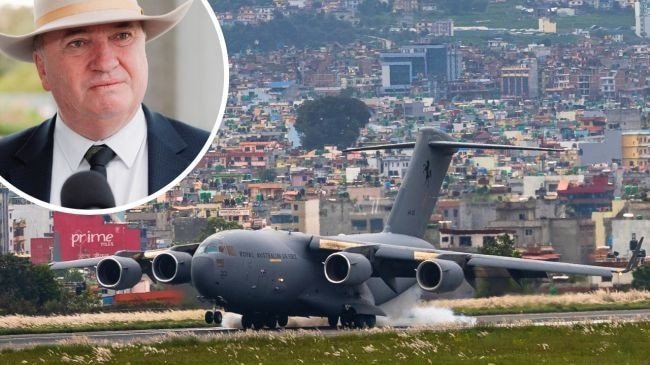
Australia Deploys Drone Specialists to Nepal as Death Toll Reaches 1,200 and Thousands Remain Missing in Devastating Flash Flooding
- Australia sends team of 15 specialist drone operators to support Nepal’s search-and-rescue efforts amidst catastrophic flash flooding that has claimed over 1,200 lives
- 38 Australians still missing, with Foreign Minister Penny Wong saying “we have grave concerns” for their safety as the search continues
- Nepali authorities face “extremely challenging” conditions, including destroyed infrastructure and difficult communications, as they search for survivors
- Australia ramps up humanitarian aid, deploying a rapid hazard assessment team and providing $11 million in assistance, including $3 million in new funding announced by Prime Minister Anthony Albanese
The devastating flash flooding in Nepal has reached catastrophic proportions, with the death toll soaring to over 1,200 and thousands more missing. As the search for survivors continues, Australia has deployed a team of 15 specialist drone operators to support Nepal’s search-and-rescue efforts.
Foreign Minister Penny Wong announced the deployment, saying that the team would use “advanced drone technology to provide mapping and thermal imaging to support Nepal’s search and rescue efforts”.
The move brings the total number of Australian personnel deployed to Nepal to 34.
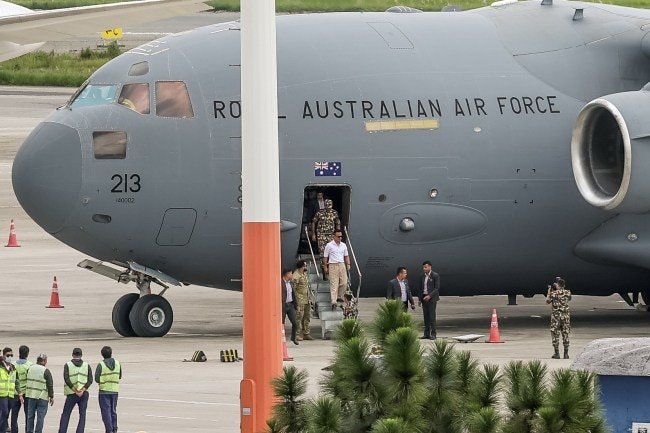
Wong expressed deep concern for the 38 Australians still missing, saying “we have grave concerns” for their safety. “Those concerns deepen every day, every hour that they remain unaccounted-for,” she said.
“We all hold on to hope, and we must hold on to hope.”
Prime Minister Anthony Albanese announced a further $3 million in humanitarian assistance to Nepal, bringing the total package to $11 million.
The funding includes $1.44 million in hygiene kits, $576,000 in menstrual hygiene kits, $2.2 million in solar lights, and $432,000 in shelter tool kits.
The disaster has highlighted the vulnerability of Nepal to climate-related disasters. According to Oxfam, Nepal contributes just 0.1% of global emissions, yet its communities are paying a devastating price as climate risks grow.
“Nepal’s devastating floods should be a wake-up call for governments and donors,” said Santosh Pandey, humanitarian and disaster risk management lead for Oxfam in Nepal.
Analysis: What This Means for Australia
The deployment of Australian drone specialists to Nepal highlights the importance of regional cooperation in responding to natural disasters. As a major player in the Indo-Pacific region, Australia has a critical role to play in supporting its neighbors in times of crisis.
The disaster also underscores the need for Australia to prioritize climate resilience and adaptation in its foreign aid and development programs.
As climate-related disasters become more frequent and intense, it is essential that Australia works with countries like Nepal to build their capacity to prepare, respond, and recover from these events.
Security analysts say that the deployment of Australian personnel to Nepal also highlights the importance of soft power in regional security.
By providing humanitarian assistance and support, Australia can build trust and strengthen relationships with its regional partners, ultimately contributing to a more stable and secure Indo-Pacific region.
Industry observers believe that the use of drone technology in search-and-rescue efforts is a game-changer in disaster response. The ability to quickly and accurately survey disaster zones and identify areas of need can save lives and reduce the risk of further harm.
As the situation in Nepal continues to unfold, Australia’s response will be closely watched by its regional partners and the international community. The country’s ability to provide effective support and assistance will be critical in shaping its reputation as a responsible and compassionate global citizen.