


Fatal Shark Attack Sparks Renewed Debate Over Beach Safety As Western Australia Records Third Deadly Incident This Year
- A 63-year-old swimmer’s tragic death at Sorrento Beach has reignited the heated debate about shark mitigation strategies in Western Australia
- The latest attack marks the 24th fatal shark incident in the state over the past 26 years, with scientists warning that warmer oceans may be contributing to the rise in attacks
- As the state grapples with the increasing number of shark attacks, the government faces mounting pressure to review its current policies and consider more effective measures to protect beachgoers
- The incident has also raised questions about the effectiveness of shark nets, with the barrier at Sorrento Beach having been permanently removed in 2020, just before the fatal attack
The death of a 63-year-old swimmer at Sorrento Beach in Perth’s northern suburbs has sent shockwaves throughout the community, sparking a renewed debate about how to keep beachgoers safe in Western Australia.
The incident, which occurred on Friday morning, is likely to revive the often-heated discussion about the state’s shark mitigation policies, with some advocating for catch-and-kill policies and others pushing for more shark nets.
As the state records its third fatal shark attack this year, the government faces mounting pressure to review its current strategies and consider more effective measures to protect beachgoers.
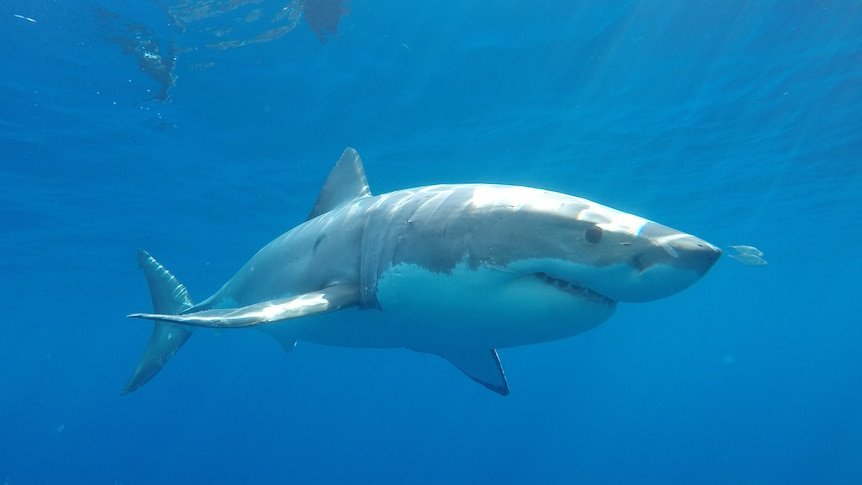
According to witnesses, the victim was swimming with a friend when the attack occurred. Jacqui Rapaic, who was at the beach at the time, described seeing blood in the water near the shoreline and a shark nearby.
“My friend said, ‘Jacq, I think there’s been a shark attack’, and I looked out to the ocean, and I could see a pool of blood,” she said.
The man’s body has not yet been located, with emergency services continuing their extensive search of the area.
The incident has left the community in a state of shock, with many calling for more to be done to prevent such tragedies in the future.
The latest attack is part of a disturbing trend in Western Australia, where the number of shark attacks has been increasing in recent years. Scientists say that warmer oceans are affecting the migratory patterns of sharks, which may be contributing to the rise in attacks.
With a hotter-than-average summer forecast, the state’s shark mitigation policies are likely to come under intense scrutiny.
The government has introduced various measures to reduce the risk of shark attacks, including shark tagging and tracking, as well as the use of shark nets at popular beaches.
However, the effectiveness of these measures has been questioned, particularly in light of the latest incident.
Analysis of national shark incident data shows that the average number of verified bite incidents recorded annually over a decade has increased every 10 years since the 1950s.
This trend is likely to continue, with scientists warning that climate change is altering the distribution and behavior of sharks. As a result, the state’s shark mitigation strategies must be adapted to address the changing circumstances.
The use of shark nets, for example, has been introduced at several beaches in Perth and the regions, including Cottesloe, Coogee, Busselton, Albany, Esperance, and Dunsborough.
However, the removal of the shark net at Sorrento Beach in 2020 has raised questions about the effectiveness of this measure.
Analysis: What This Means for Australia
The increasing number of shark attacks in Western Australia has significant implications for national security, law enforcement, and community safety. The state’s shark mitigation policies must be reviewed and adapted to address the changing circumstances, taking into account the latest scientific research and expert advice.
Security analysts say that the use of shark nets and other barriers may not be enough to prevent attacks, and that a more comprehensive approach is needed to protect beachgoers.
Law enforcement insiders warn that the current strategies may not be sufficient to address the growing threat, and that more needs to be done to educate the public about the risks and to prevent attacks.
The economic and social consequences of shark attacks must also be considered, with the tourism industry and local communities likely to be affected by the increasing number of incidents.
Expert commentary suggests that a multi-faceted approach is needed to address the issue of shark attacks in Western Australia.
This could include the use of shark nets, as well as other measures such as shark tagging and tracking, and the introduction of warning systems and emergency response plans.
Industry observers believe that the state’s shark mitigation strategies must be guided by the latest scientific research and expert advice, and that a coordinated approach is needed to address the issue.
As the state grapples with the increasing number of shark attacks, it is clear that a comprehensive and adaptive approach is needed to protect beachgoers and to address the growing threat.
The Western Australian government has introduced various initiatives to reduce the risk of shark attacks, including the use of shark nets and the implementation of shark tagging programs.
However, the effectiveness of these measures has been questioned, particularly in light of the latest incident.
The government must consider the latest scientific research and expert advice when reviewing its shark mitigation strategies, and must be prepared to adapt its approach as circumstances change.
The use of Australian Bureau of Statistics data and other credible sources can help inform the development of effective policies and strategies to address the issue of shark attacks in Western Australia.
In conclusion, the fatal shark attack at Sorrento Beach has highlighted the need for a comprehensive and adaptive approach to shark mitigation in Western Australia. The state’s shark mitigation policies must be guided by the latest scientific research and expert advice, and must be prepared to address the changing circumstances.
As the state grapples with the increasing number of shark attacks, it is clear that a coordinated and multi-faceted approach is needed to protect beachgoers and to address the growing threat.
The government must consider the economic and social consequences of shark attacks, as well as the implications for national security and law enforcement, when developing its shark mitigation strategies.