
Rural Roads Turned Into Death Traps: Crackdown On Hooning In Canberra Exposes Alarming Threat To Community Safety
- Dozens of drivers caught putting lives at risk with reckless behaviour on rural roads, sparking urgent calls for action to prevent tragedies
- Police operation uncovers shocking extent of drink and drug driving, with multiple arrests and vehicle seizures in just two nights
- Authorities warn that late-night gatherings in rural areas are creating a perfect storm of danger, with devastating consequences for innocent road users
- Experts sound alarm over long-term impact of hooning on rural communities, with fears of lasting damage to social fabric and economic stability
The usually quiet rural roads of Canberra have been transformed into potential death traps, with a recent police operation exposing the alarming threat posed by hooning and reckless driving.
In a shocking display of disregard for human life, dozens of drivers were caught putting their own lives and those of others at risk, prompting urgent calls for action to prevent further tragedies.
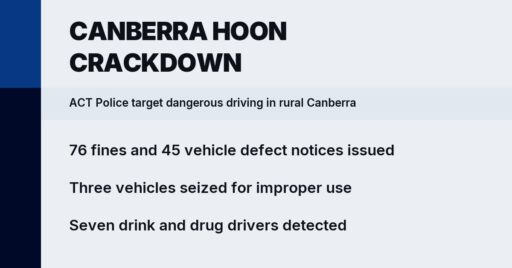
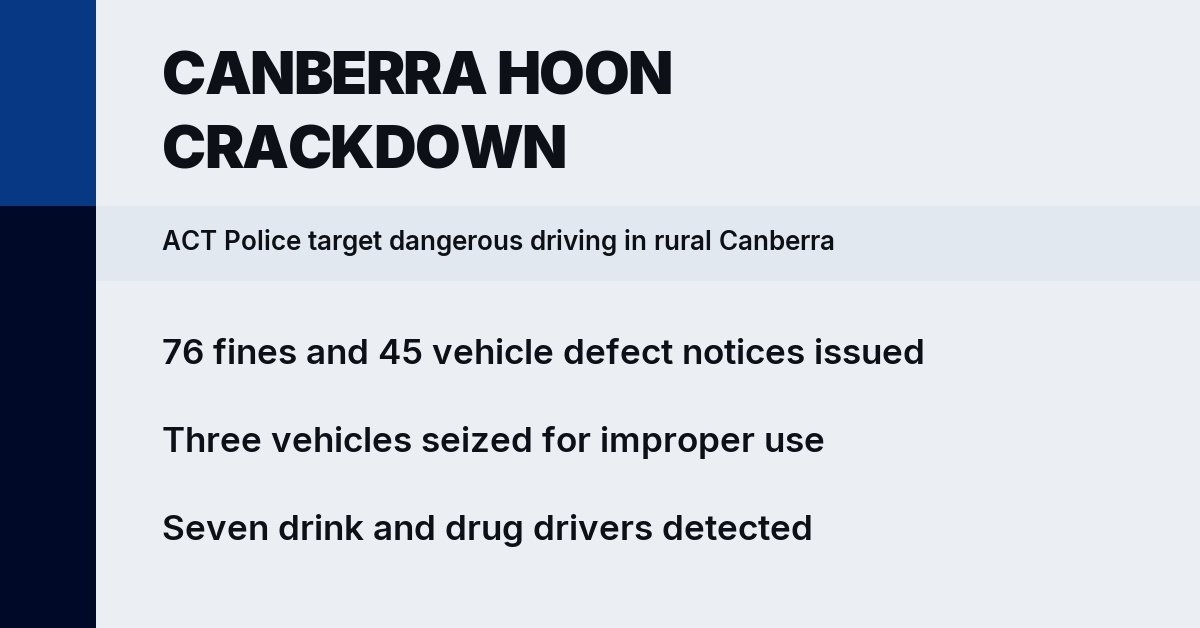
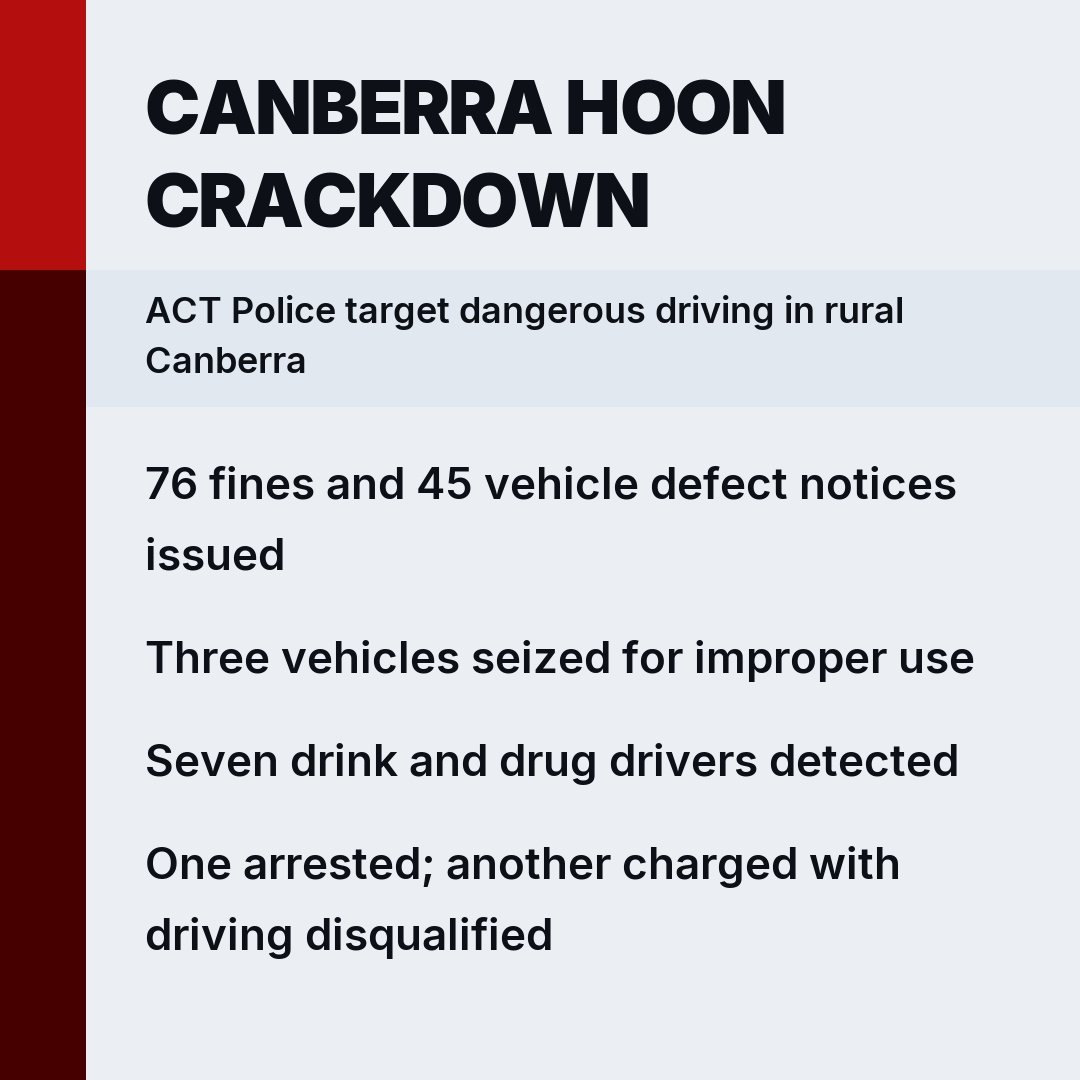
The joint operation, involving ACT Policing, ACTP Intelligence, Rural Patrol, and Tuggeranong Police Station, resulted in a staggering 76 fines, 45 vehicle defect notices, and three vehicle seizures, as well as the detection of multiple drink and drug drivers.
At the heart of the problem lies the issue of late-night gatherings in rural areas, which police warn are creating a perfect storm of danger.
These gatherings, often involving large groups of young people, are leading to a surge in reckless driving, with devastating consequences for innocent road users. The operation, which focused on Canberra’s rural areas, has highlighted the critical need for increased enforcement and education to prevent further incidents.
As Detective Inspector Mark Steel noted, “You’ve only got to drive along some of our rural roads to see the aftermath of some of this activity, which is totally unacceptable to our rural communities.”
To understand the context behind this alarming trend, it is essential to examine the broader social and economic factors at play.
The rise of hooning and reckless driving in rural areas can be attributed, in part, to a lack of entertainment and recreational opportunities for young people.
Additionally, the ease of access to vehicles and the perceived anonymity of rural roads can create a sense of invincibility among drivers, leading them to engage in high-risk behaviour.
However, as the recent operation has shown, this behaviour has severe consequences, not only for the drivers themselves but also for the wider community. The economic and social costs of hooning and reckless driving are substantial, with the potential to damage rural communities and undermine social cohesion.
Analysis: What This Means for Australia
The implications of this trend are far-reaching, with significant consequences for national security, law enforcement, and community safety.
The fact that dozens of drivers were caught engaging in reckless behaviour on rural roads highlights the need for increased enforcement and education to prevent further incidents.
Furthermore, the rise of hooning and reckless driving in rural areas has serious implications for Australia’s road safety record, with the potential to undermine efforts to reduce the number of fatalities and injuries on our roads.
As security analysts say, “The threat posed by hooning and reckless driving is not limited to rural areas; it has the potential to spread to urban areas, putting even more lives at risk.” Law enforcement insiders warn that the lack of resources and infrastructure in rural areas can hinder efforts to combat hooning and reckless driving, making it essential to develop targeted strategies to address this issue.
Expert commentary on the issue highlights the need for a multi-faceted approach to address the root causes of hooning and reckless driving. According to industry observers, “The key to preventing further incidents lies in a combination of education, enforcement, and community engagement.
By working together, we can create a cultural shift that prioritizes road safety and responsible driving behaviour.” Security analysts believe that the use of technology, such as speed cameras and licence plate recognition systems, can play a critical role in detecting and preventing hooning and reckless driving.
Moreover, law enforcement insiders stress the importance of collaboration between police, local government, and community groups to develop effective strategies to combat this issue.
In conclusion, the recent police operation in Canberra has exposed the alarming threat posed by hooning and reckless driving on rural roads. The consequences of this behaviour are severe, with significant implications for national security, law enforcement, and community safety.
As Australia continues to grapple with the challenges of road safety, it is essential to develop targeted strategies to address the root causes of hooning and reckless driving.
By working together, we can create a safer, more responsible driving culture that prioritizes the well-being of all road users. For more information on road safety initiatives, visit the Australian Bureau of Statistics website or explore the road safety section of our website.
The issue of hooning and reckless driving is not limited to Canberra; it is a national problem that requires a coordinated response.
As state and territory parliament representatives consider new legislation to address this issue, it is essential to prioritize the needs of rural communities and ensure that any solutions are tailored to their specific needs.
By doing so, we can create a safer, more sustainable future for all Australians. For further information on this topic, visit the Australian Government website or explore the government and politics section of our website.