
Call For Tougher Sentencing: Mandatory Life Imprisonment For Domestic Violence Murderers Sparks Heated Debate In New South Wales
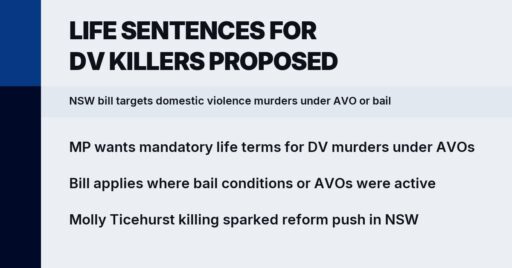
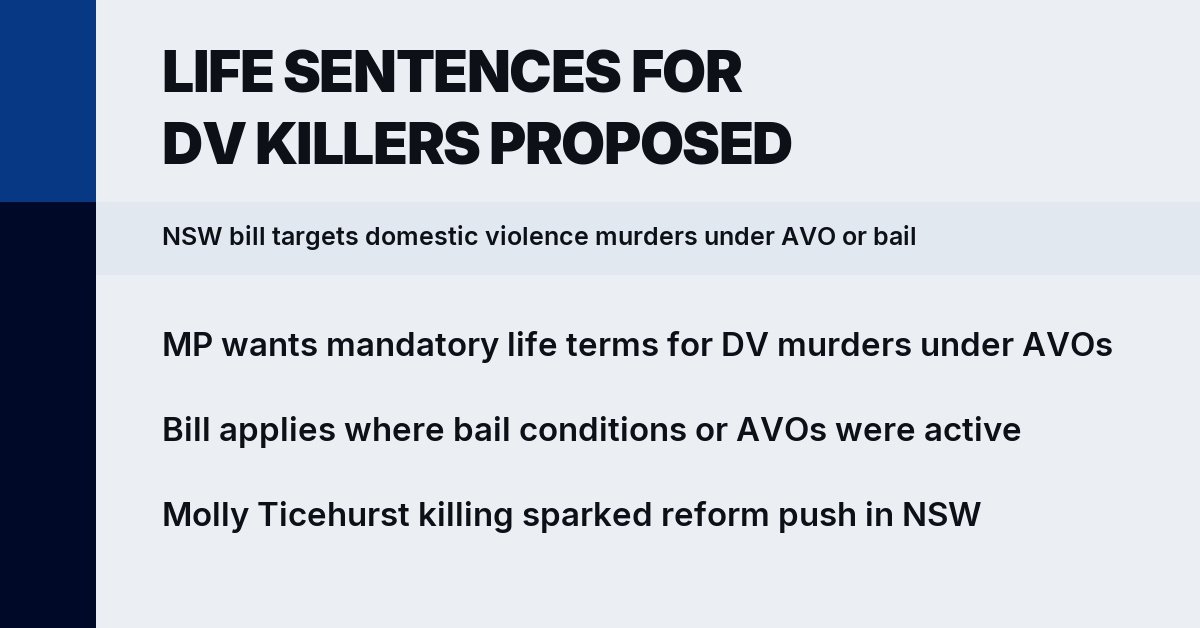
- A proposed bill seeks to introduce mandatory life sentences for domestic violence murderers if an AVO or bail conditions are in place, sparking a heated debate about the effectiveness of tougher sentencing in reducing domestic violence.
- Independent MP Phil Donato’s draft legislation aims to send a strong message that domestic violence will not be tolerated, but critics argue it may divert attention from more effective solutions such as crisis accommodation and education programs.
- The proposed reform comes after a series of devastating domestic violence cases, including the murder of Forbes woman Molly Ticehurst, whose killer was sentenced to 28 years in jail, with a non-parole period of 20 years.
- Security analysts say that while tougher sentencing may provide a sense of justice for victims’ families, it may not address the root causes of domestic violence, and may even lead to unintended consequences such as increased violence and recidivism.
The New South Wales government is being urged to support mandatory life sentences for certain domestic violence murderers, in a bid to send a strong message that domestic violence will not be tolerated.
Independent MP Phil Donato has tabled a motion in state parliament outlining his plan to introduce the Crimes Amendment (Mandatory Life Sentences) Bill 2026, which would mandate life sentences for people who kill their current or former partner while an apprehended domestic violence order is in place or if the perpetrator is on bail for domestic violence charges.
The proposed reform has sparked a heated debate about the effectiveness of tougher sentencing in reducing domestic violence. Proponents of the bill argue that it will provide a strong deterrent and send a clear message that domestic violence will not be tolerated.
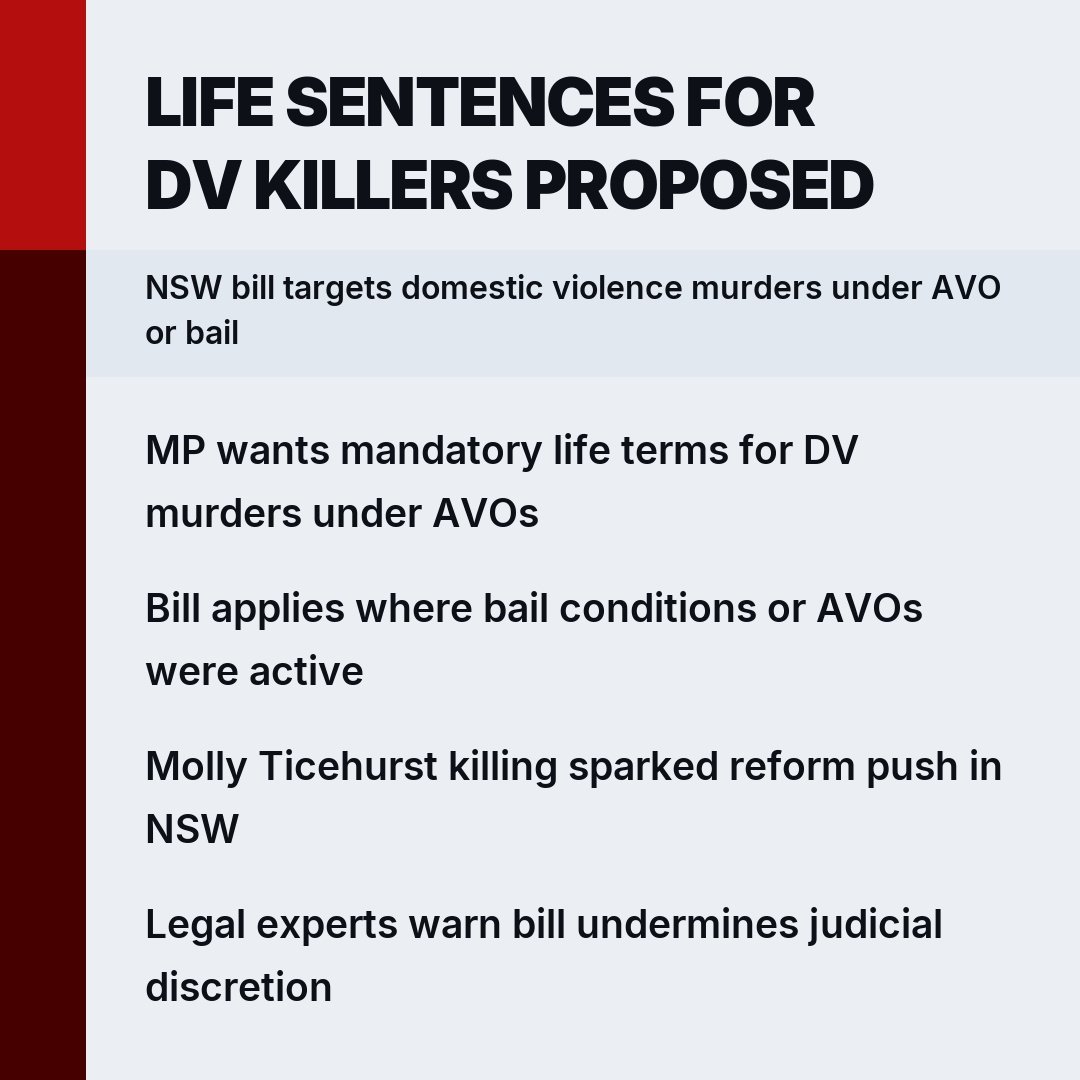
However, critics argue that it may divert attention from more effective solutions such as crisis accommodation, anger management and diversion programs for perpetrators, and delivering consent and violence education in schools and universities.
Law enforcement insiders warn that mandatory sentencing can lead to injustice and may not address the root causes of domestic violence.
The draft legislation is a response to a series of devastating domestic violence cases, including the murder of Forbes woman Molly Ticehurst, whose killer was sentenced to 28 years in jail, with a non-parole period of 20 years.
The case highlighted the need for stronger sentencing laws and more effective measures to prevent domestic violence. However, it also raised concerns about the effectiveness of the current justice system in dealing with domestic violence cases.
According to domestic violence statistics, domestic violence is a major problem in Australia, with one in four women experiencing domestic violence in their lifetime.
Analysis: What This Means for Australia
The proposed bill has significant implications for Australia’s approach to domestic violence. If passed, it would send a strong message that domestic violence will not be tolerated and that perpetrators will face severe consequences.
However, it also raises concerns about the potential unintended consequences of mandatory sentencing, including increased violence and recidivism.
Security analysts say that a more effective approach would be to address the root causes of domestic violence, including poverty, lack of education, and social isolation.
This could involve increasing funding for crisis accommodation, anger management and diversion programs, and delivering consent and violence education in schools and universities. As Australian Institute of Criminology notes, addressing the root causes of domestic violence requires a comprehensive approach that involves multiple stakeholders and strategies.
Expert commentary on the proposed bill is divided. Some argue that it is a necessary measure to send a strong message that domestic violence will not be tolerated.
Others argue that it is a simplistic solution to a complex problem and that it may divert attention from more effective solutions.
David Heilpern, dean of law at Southern Cross University, says that mandatory sentencing can lead to injustice and that the real emphasis should be on providing more crisis accommodation for victim-survivors, anger management and diversion programs for perpetrators, and delivering consent and violence education in schools and universities.
As crime prevention strategies, these approaches have been shown to be effective in reducing domestic violence.
In conclusion, the proposed bill to introduce mandatory life sentences for domestic violence murderers is a complex and contentious issue. While it may provide a sense of justice for victims’ families, it may not address the root causes of domestic violence.
A more effective approach would be to address the root causes of domestic violence, including poverty, lack of education, and social isolation, and to increase funding for crisis accommodation, anger management and diversion programs, and delivering consent and violence education in schools and universities.
As National Plan to Reduce Violence Against Women and Their Children notes, reducing domestic violence requires a comprehensive approach that involves multiple stakeholders and strategies.