
Australian Public Service Under Siege: Tasmanian Government’s Brutal Job Cuts Spark Outrage and Tears
- Heart-wrenching scenes unfold as public service workers are informed of job cuts with minimal notice, leaving many in tears and feeling betrayed
- The Community and Public Sector Union accuses the Tasmanian government of “mishandling” the process, causing added uncertainty and distress among staff
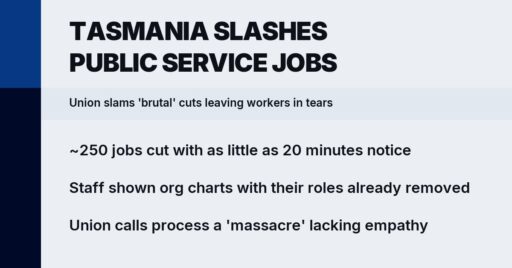
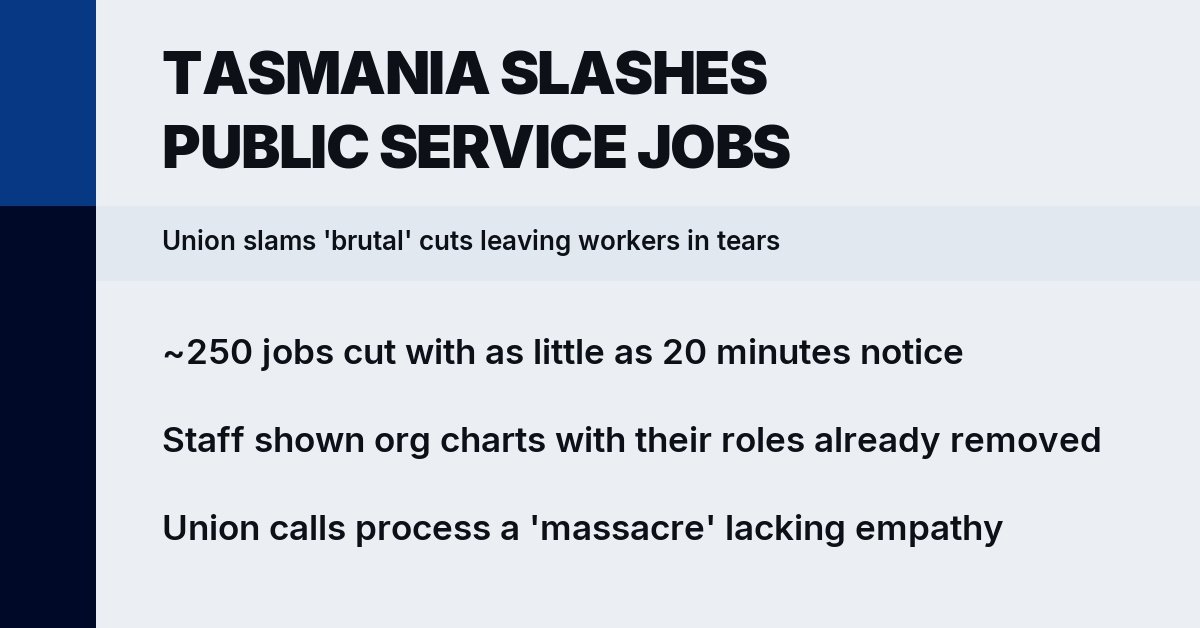
- About 250 jobs are on the chopping block, with 150 already identified for abolition, as the government pushes for “efficiencies” in the state budget
- Concerns grow over the impact on public services and the community, as the government prioritizes budget repair over the well-being of its employees
The Tasmanian government’s quest for savings has turned into a nightmare for public service workers, with job cuts underway and emotions running high.
The Community and Public Sector Union has slammed the government’s handling of the process, accusing them of “drip-feeding” information and leaving staff in the dark.
As the news broke, workers were seen leaving meetings in tears, having been informed of the devastating news with minimal notice.
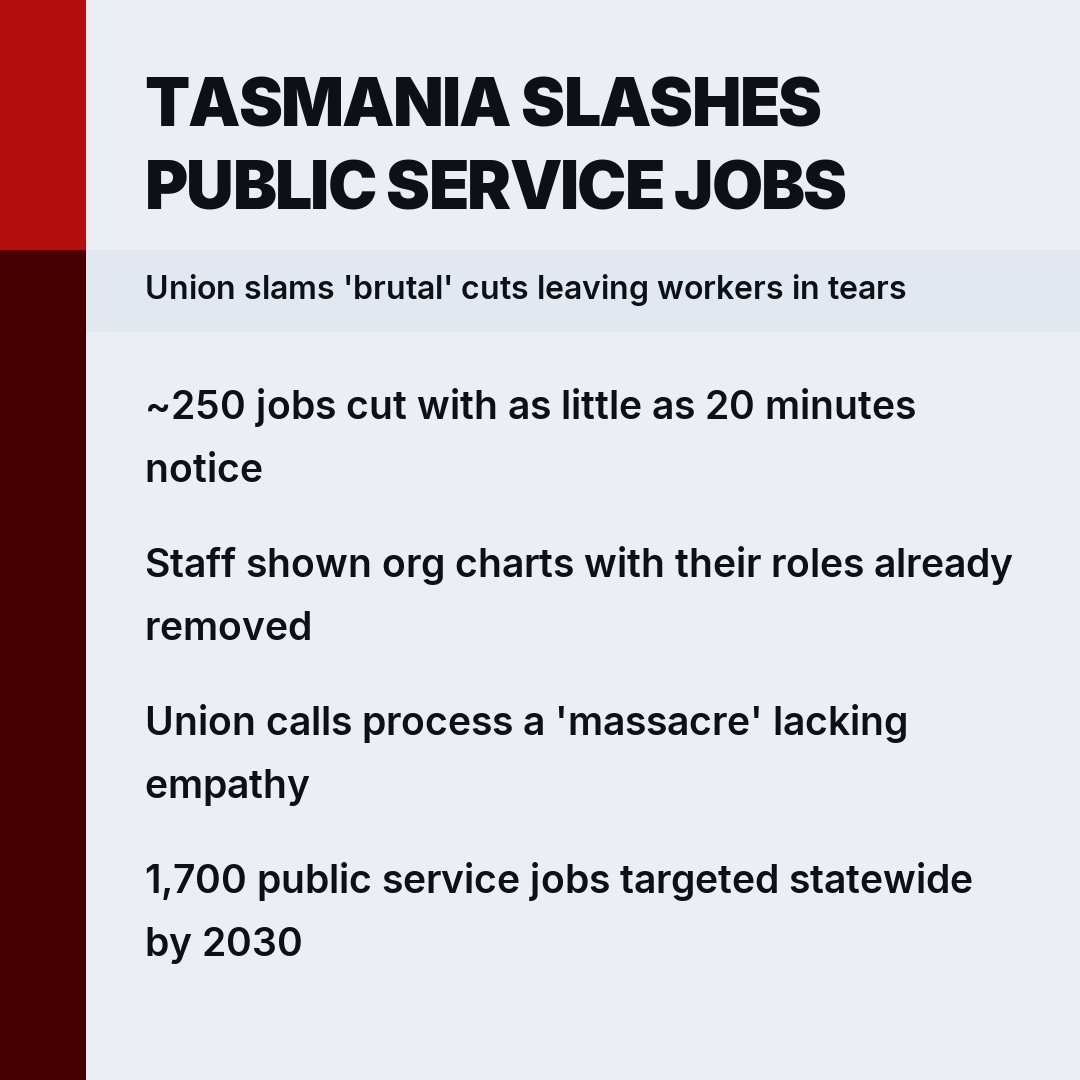
The core of the issue lies in the government’s efforts to shrink the state service, with about 250 jobs on the line. The Department of Premier and Cabinet and Building Tasmania have been particularly affected, with 150 jobs already identified for abolition.
The government claims that the cuts are necessary to achieve “efficiencies” in the state budget, but the union argues that the process has been mishandled, causing unnecessary distress and uncertainty among staff.
Minister Kerry Vincent has pushed back against the criticism, stating that change is always difficult, but the union remains unconvinced.
To understand the context of this crisis, it’s essential to delve into the background of the Tasmanian government’s budget repair efforts.
Treasurer Eric Abetz has been vocal about his preference for cutting expenditure to balance the state’s finances, with a target of finding $1.47 billion in “efficiencies” over the next few years.
The state budget outlines a plan to cut 1,700 public service jobs by 2030 and a further 100 by 2032.
While the government argues that these measures are necessary to ensure the state’s financial sustainability, critics argue that the approach is short-sighted and will have far-reaching consequences for the community.
As the situation unfolds, it’s crucial to consider the broader implications of the job cuts.
Analysis: What This Means for Australia is that the Tasmanian government’s approach may set a worrying precedent for other states and territories.
The prioritization of budget repair over public services and employee well-being raises concerns about the long-term impact on the community. Security analysts say that the cuts could lead to a brain drain in the public sector, compromising the state’s ability to deliver essential services.
Law enforcement insiders warn that the reduction in staff could also compromise the state’s ability to respond to emergencies and maintain public safety.
Expert commentary suggests that the government’s approach is misguided and may ultimately prove counterproductive. Industry observers believe that the focus on cutting jobs and services will have a devastating impact on the state’s economy and social fabric.
Instead of pursuing a policy of austerity, the government should be exploring alternative measures to raise revenue and stimulate economic growth.
As Acting Greens Leader Vica Bayley pointed out, the government could consider raising new revenue streams, such as increasing taxes on corporations, or abandoning costly projects like the Hobart stadium development.
In conclusion, the Tasmanian government’s job cuts have sparked a heated debate about the priorities of the state’s budget repair efforts. As the situation continues to unfold, it’s essential to consider the long-term consequences of these actions and the impact on the community.
The government must be held accountable for its decisions and ensure that the well-being of its employees and the community is not sacrificed at the altar of fiscal responsibility.
For more information on the Tasmanian state budget and its implications, please visit our website. Additionally, you can find more information on the Australian Bureau of Statistics website, which provides data on the state’s economic performance and labor market trends.