


Australian Shark Attack Survivor Faces New Health Crisis As Second Skin Graft Fails: A Desperate Fight For Recovery
- A 34-year-old teacher, Leah Stewart, is struggling to come to terms with her second skin graft failure, months after a devastating shark attack in Sydney.
- Stewart’s courageous journey has been marked by a series of setbacks, including an amputated arm and a persistent open leg wound that refuses to heal.
- As she navigates the dark waters of recovery, Stewart is facing an uncertain future, with her treatment options dwindling and her spirits wavering.
- Despite the odds, Stewart remains determined to rebuild her life, but the road ahead will be long and arduous, filled with challenges that will test her resolve and resilience.
The shark attack that changed Leah Stewart’s life forever occurred on June 13 at Coogee Beach in Sydney. The 34-year-old teacher was mauled by a shark, suffering severe injuries, including an amputated arm and a deep leg wound.
As she struggled to come to terms with the trauma, Stewart began sharing her recovery journey on social media, providing a candid and often harrowing insight into her experiences.
The latest update, however, has brought devastating news: her second skin graft has failed, leaving her with an open leg wound that refuses to heal.
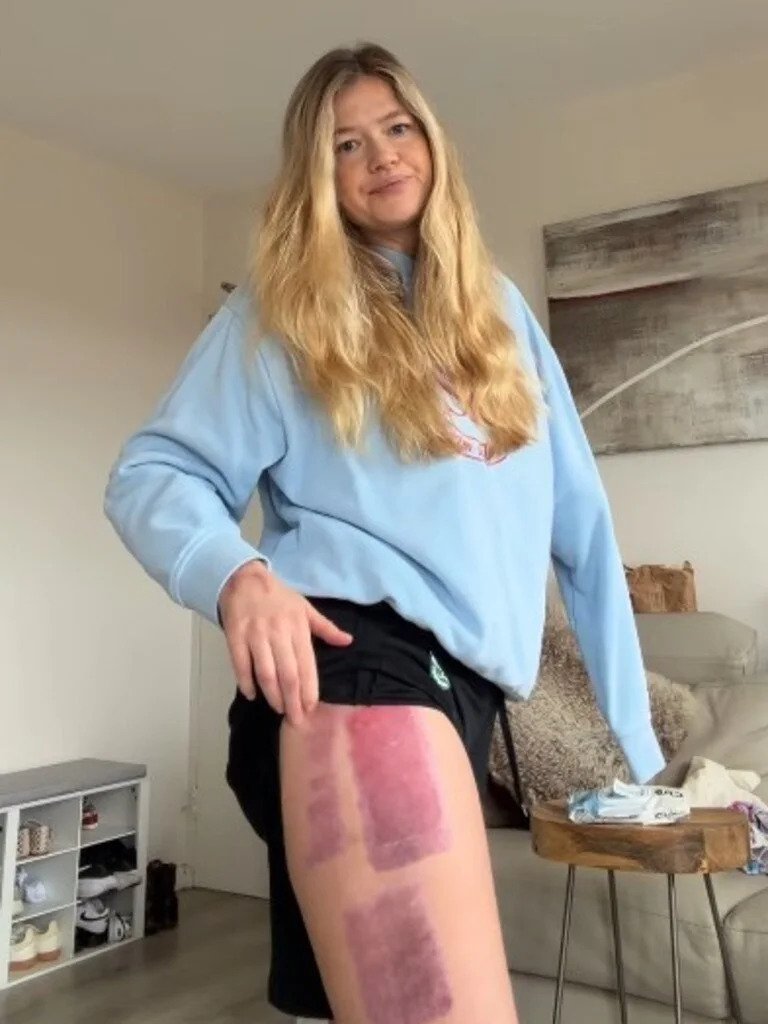
Stewart’s journey has been marked by a series of setbacks, each one posing a significant challenge to her physical and emotional well-being.
The initial attack was a brutal reminder of the dangers that lurk in the depths of the ocean, and the subsequent recovery process has been a grueling test of endurance.
The portable negative pressure wound therapy device, or VAC machine, has been a constant companion, providing a vital service in the healing process, but also imposing significant restrictions on Stewart’s daily life.
As she navigates the complexities of her treatment, Stewart is facing an uncertain future, with her options dwindling and her spirits wavering.
The failure of the second skin graft is a significant setback, and Stewart is now confronting the possibility of further complications and an extended recovery period.
As she struggles to come to terms with this new reality, Stewart is drawing on her inner reserves of strength and resilience, determined to rebuild her life and regain control over her circumstances.
The journey ahead will be long and arduous, filled with challenges that will test her resolve and push her to the limits of human endurance. Despite the odds, Stewart remains determined to move forward, fueled by a fierce determination to overcome the obstacles that stand in her way.
As Stewart’s story continues to unfold, it is raising important questions about the support and resources available to survivors of traumatic incidents. The physical and emotional toll of such events can be devastating, and the recovery process is often marked by significant challenges and setbacks.
In this context, the role of medical professionals, support services, and community networks is critical, providing a vital safety net for those struggling to come to terms with their experiences.
As Stewart navigates the complexities of her recovery, she is drawing on the support of her loved ones, medical professionals, and the wider community, highlighting the importance of collective support and solidarity in the face of adversity.
Analysis: What This Means for Australia is a critical aspect of this story, as it highlights the importance of providing adequate support and resources to survivors of traumatic incidents.
The failure of Stewart’s second skin graft is a stark reminder of the complexities and challenges associated with recovery, and the need for a comprehensive and integrated approach to support services.
As Australia grapples with the implications of this story, it is essential to consider the broader context of community support, medical resources, and social services, recognizing the critical role that these play in facilitating recovery and promoting resilience.
In this context, the story of Leah Stewart serves as a powerful reminder of the need for collective action and solidarity, highlighting the importance of providing a supportive and inclusive environment for those struggling to overcome the challenges of trauma and adversity.
Security analysts say that the story of Leah Stewart is a powerful reminder of the importance of community support and solidarity in the face of adversity.
As Australia continues to grapple with the implications of this story, it is essential to recognize the critical role that medical professionals, support services, and community networks play in facilitating recovery and promoting resilience.
Law enforcement insiders warn that the challenges associated with recovery are often significant, and that a comprehensive and integrated approach to support services is essential for promoting positive outcomes.
Industry observers believe that the story of Leah Stewart serves as a powerful reminder of the need for collective action and solidarity, highlighting the importance of providing a supportive and inclusive environment for those struggling to overcome the challenges of trauma and adversity.
As the story of Leah Stewart continues to unfold, it is likely to have significant implications for Australia, highlighting the importance of community support, medical resources, and social services.
The failure of her second skin graft is a stark reminder of the complexities and challenges associated with recovery, and the need for a comprehensive and integrated approach to support services.
In this context, the story of Leah Stewart serves as a powerful reminder of the need for collective action and solidarity, recognizing the critical role that these play in facilitating recovery and promoting resilience.
As Australia grapples with the implications of this story, it is essential to consider the broader context of community support, medical resources, and social services, highlighting the importance of providing a supportive and inclusive environment for those struggling to overcome the challenges of trauma and adversity.
In conclusion, the story of Leah Stewart is a powerful reminder of the importance of community support and solidarity in the face of adversity.
As Australia continues to grapple with the implications of this story, it is essential to recognize the critical role that medical professionals, support services, and community networks play in facilitating recovery and promoting resilience.
The failure of her second skin graft is a stark reminder of the complexities and challenges associated with recovery, and the need for a comprehensive and integrated approach to support services.
As the story of Leah Stewart continues to unfold, it is likely to have significant implications for Australia, highlighting the importance of community support, medical resources, and social services, and recognizing the critical role that these play in facilitating recovery and promoting resilience.
For more information on this story, please visit the website of the Australian Bureau of Statistics or the Royal Prince Alfred Hospital.